Hosting an Event on a Farm: The Complete Guide
Hosting an event on a farm, explained by one: what we provide, what it costs, weather backups, and the questions to ask before you book anywhere.
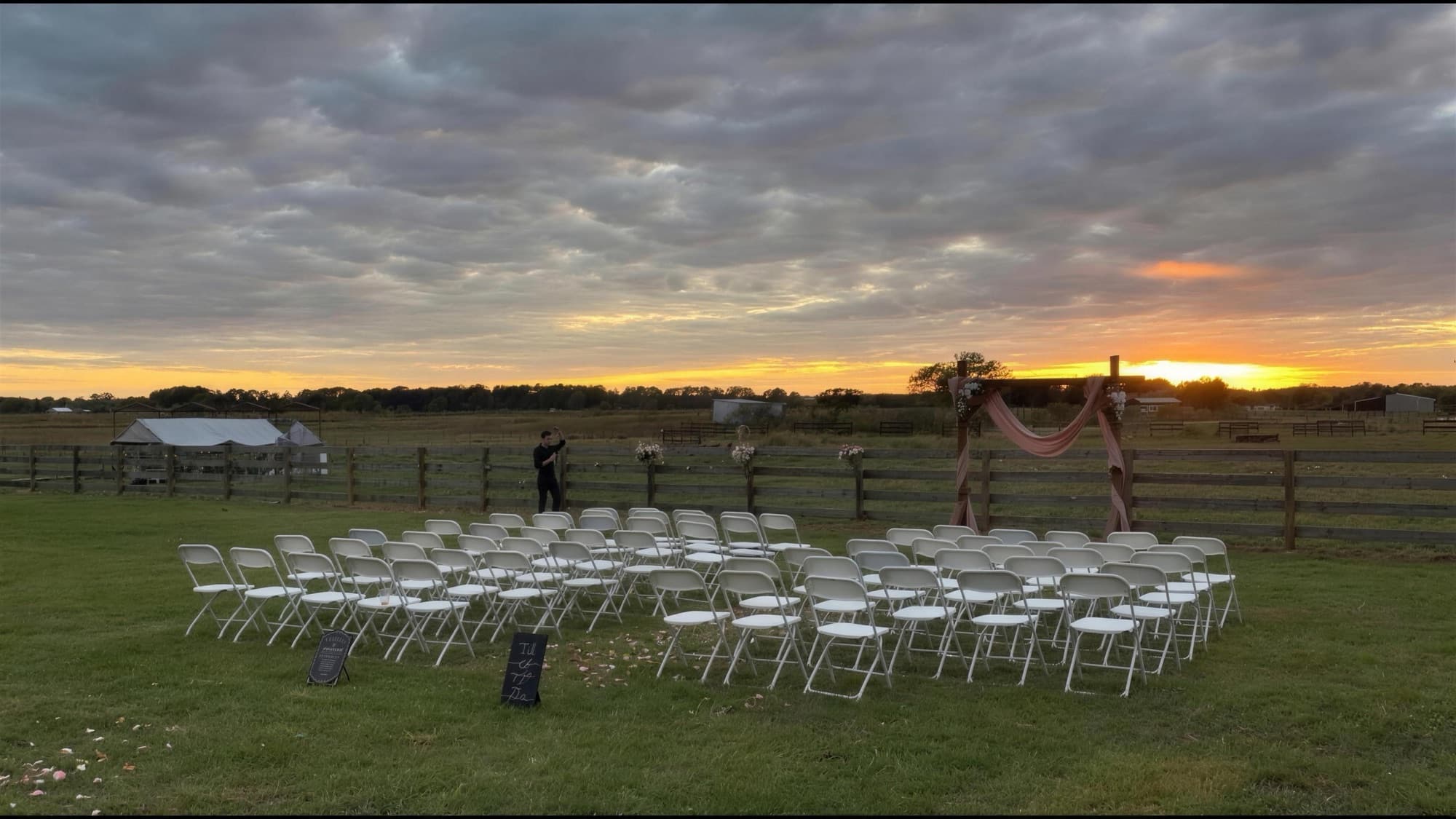
Hosting an event on a farm means renting a working farm as your venue: you pick a package for the space and the hours you need, the farm handles setup, parking, and restrooms (and often the food), and the animals and open land carry the rest. Most working farms do rent their grounds for private events, ours included. The four we host most are weddings, birthday parties, family reunions, and corporate retreats, and the handful of things worth settling before you book any farm are the same everywhere: the rain plan, how many people fit indoors, the food and vendor rules, and exactly what belongs to you for the day.
At some point the question we hear most after "can I pet the goats?" became "could we have the party here?" Fair question. We've hosted weddings under the barn roof, birthdays in the picnic grove, and reunions across the pastures that ran until the fireflies showed up. So this is our guide to hosting an event on a farm: what a farm gives you that nowhere else can, what it tends to cost, what can go sideways, and the questions we'd want answered before booking any venue, including ours.
Why host an event on a farm?
Start with the question people are too polite to ask outright: do farms rent out space for private parties? Yes. Plenty of working farms do, including this one. It's part of how small farms keep the lights on, and most of us are glad for the company.
What you get in return is hard to fake indoors. The animals are built-in entertainment that never needs a battery, a queue, or a costumed teenager. There's room for kids to run until they fall over and for adults to find a quiet fence to lean on. And the light in the last hour before sunset does things no ballroom dimmer switch will ever do. One of our farm dogs has worked more parties than most caterers and greets every guest as a personal friend.
The counterweight, in the same breath: it's outdoors, it's a workplace, and after rain the ground is mud. The people who want a farm party want it because of all that, not despite it. If a guest list full of white trousers is non-negotiable, a ballroom will serve you better, and we mean that kindly.

What kinds of events can a farm host?
The four we host most are weddings and receptions, birthday celebrations, family reunions, and corporate retreats. Weddings lean on the outdoor ceremony spaces, the barn for the reception, and farm-to-table catering. Birthdays, which we host for all ages, run on animal encounters, a guided farm tour, an outdoor party space, and a farm menu. Family reunions take the run of the grounds, with lawn games, a picnic setup, catering options, and group farm tours. Corporate retreats get private event space, team-building, hands-on farm workshops, and catered meals. Planning something that isn't on that list? Reach out and tell us what you have in mind, and we'll let you know if the farm is a good fit.
One distinction saves people a lot of emailing. An event package is for when you need the venue itself: hours that belong to you, tables, food, the barn. If your group mostly wants to experience the farm rather than take it over, two lighter, hands-on options fit better. The first is a private group visit, which hands a small group the run of the farm for a half or full day of walking the pastures, feeding the goats, and sharing a good lunch. The second is a private or custom workshop, built around one thing your people want to make or learn, from flower crowns to sourdough. If you're not sure which you are, describe the day you're imagining and we'll tell you. Any venue worth booking can answer that question in one email. If the email takes a week, that's an answer too.
What does the farm provide, and what do you bring?
A farm event package bundles the venue and the practical bones of the day, so you're not sourcing all of it from a handful of separate vendors. Which pieces come with which package, and the current capacity for each, live on our events page so they stay accurate. A blog post would only let them drift out of date.

What you bring: your people, your cake, and whatever makes the day yours. The long tail of specifics (your aunt's folding chairs, the caterer your family swears by, the playlist with strong opinions in it) gets settled in the inquiry conversation, not in a FAQ. That's true at any farm worth its hay. The real answer to most "can we...?" questions is "probably, let's talk about it," and the talk is usually short. We'd rather hear about the chairs in week one than meet them in the driveway on the day.
How much does it cost to host an event on a farm?
The honest answer is that it depends, and four levers move the number at any farm: guest count, how many hours belong to you, catering, and coordination. Rather than freeze a figure here that would drift out of date, we keep the current packages and pricing public on our events page, because we'd want them to be if we were the ones asking. The three tiers are:
- The Gathering
- The Celebration
- The Estate Day
So, how much does it cost to host an event on a farm? Enough that it's worth a real conversation rather than a guess in a blog post, which is why the numbers live where we can keep them current. One note nobody else seems to say: the venue fee is rarely the biggest line on a party budget. Food, drink, and rentals usually outrun it, so budget the whole day, not just the gate. The full details, current for the season, live on our event packages page.
What happens if it rains at a farm event?
What happens if it rains at a farm event? Here, everyone moves into the barn and the party keeps going. The barn is the rain plan, and it's a good one. Ask any farm venue this question early, because a farm with no indoor backup is selling you a coin flip. Better yet, ask to stand inside the backup space and picture your whole guest list in it.
Rain has a sequel: mud. The ground stays soft for a day or two after a storm, so put footwear guidance right in the invitation. A line like "shoes that can handle a farm" saves a dozen pairs from ruin, and saves someone the barefoot walk back to the car.
The rest of the unglamorous list: parking is on site, restrooms are real and included with every package, and in summer we'll point you to the shade before you need it. On accessibility, the gravel paths are manageable for grandparents and strollers; heels are not. Sneakers do fine in dry weeks, and boots earn their keep in wet ones. For the day-of rules guests tend to ask about, see the practical visiting rules.
When is the best time of year and time of day?
Every season works; they just work differently. Spring is baby animals and soft grass. Summer is long golden evenings that stretch a party for free. Fall is harvest color and sweater weather. Winter is for the brave and the barn, and the brave tend to have a fine time of it; the people who book winter know exactly what they're doing, and their photos prove it.
Time of day matters more than people expect. The animals run on a schedule, and if your event overlaps feeding time, you get the best hour of farm life at no extra charge: kids at the fence, goats performing, every phone out. Golden hour is real, too, and photographers ask for it by name. We won't promise more than the light. The light is usually enough.

Food, drink, and the rules that come with animals
Farm-to-table catering is one of the options: food from these gardens, served a few hundred feet from where it grew. Outside food and caterers get discussed in the inquiry, because the answer depends on the event.
Two rules never bend anywhere on this farm. Food stays out of the animal areas, and hands get washed between the goats and the cake. Both exist for reasons you can guess, and we enforce them cheerfully so you don't have to.
Vendors and insurance, in plain language: most farm venues will ask about your caterer's insurance, because animals, open ground, and liability all live here. A venue that doesn't ask isn't being easygoing. It's being careless, and you should read it as a warning sign rather than a convenience.
Celebrating at a working farm
A few things stay true no matter whose name is on the cake. Gates stay closed, because something lives behind every one of them. Chores don't pause for the party, so someone will be topping off water troughs while your toasts happen, and the donkeys make a surprisingly good audience. And the music ends at a reasonable hour, here and at every farm we know of, because animals sleep and neighbors exist. The exact hour comes up in the inquiry. Guests rarely mind any of this; mostly they ask if they can watch.
None of that is a list of warnings. The guests who notice the farm is real and working around them tend to love the party more for it, not less.
Can you host a kids' birthday party on a farm?
The short version: the animals are the entertainment, the parties run far simpler than the Pinterest version, and most families book the smallest package and find it's plenty. No hired entertainer, no rented inflatable, no craft station abandoned mid-glitter. The goats do the entertaining, which means parents get to stand still with a plate for an hour, a luxury most birthday hosts forget to plan for. We've written up birthday party ideas from the parties we host, covering ages, invitations, cake logistics, the lot.
Barn weddings, and what to ask first
The barn and the open sky make a wedding people remember, and we say that as the people who sweep the barn afterward. An old barn needs almost no decorating; the wood does the work. But barn venues deserve different questions than ballrooms: where everyone goes in rain, how many fit inside, real restrooms or rentals, what the power can run, when the music stops. We collected the questions we'd ask any barn wedding venue, ours included, so you can bring them on the tour.

Corporate retreats and team offsites
A day of shared, real work gets a team talking in a way another conference room never will. We've watched job titles dissolve in a goat pen before the coffee ran out. Teams leave with dirt on their boots and, reliably, plans to come back with their families. The full case, sample agendas included, is in why a team offsite belongs on a farm.
Party activities that hold a crowd
Goat feeding, egg collecting, a honey and cheese tasting, the sunset hayride, the fire pit and s'mores to end the night: the activities that work here all share one principle, that real farm jobs out-entertain anything you could rent. The short version is to schedule less than you think you need. We keep a running list of the party activities guests remember, including the section no craft blog writes, on what flops.
How booking works, and what to ask any farm
Booking starts with an inquiry, and the inquiry is a conversation, not a form shouted into the void. Tell us the date you're hoping for, roughly how many people, and what kind of day you want. The guest count and the shape of the day pick the package, and popular dates go early, fall most of all. We'd suggest reaching out a few months ahead for peak-season dates. The conversation is also where every "can we...?" gets a real answer instead of a policy page. Bring your questions in whatever shape they're in; half of ours arrive as "this might be weird, but..." and almost none of them are.
Whichever farm you're considering, ask these before you put money down:
- What's the rain plan, and does it hold every guest at once?
- How many people can the indoor space actually take?
- Real restrooms, or rentals?
- What power is available, and what can it run?
- When does the music end?
- What are the rules for caterers and outside vendors?
- Which animals will be around, and what are the rules with them?
A farm with crisp answers to all seven has done this before, and that's the venue you want. If the answers sound good, or you'd just like to hear ours, start the conversation on our events page. We'll put the kettle on.
Frequently asked questions
Yes. Many working farms rent out their grounds for private events, and it is one of the ways small farms stay afloat. You choose a package for the number of guests and the hours you need, and the farm handles setup, parking, and restrooms.
A good farm venue has an indoor backup, usually a barn, and the party simply moves inside. Ask about the rain plan before you book, and make sure the indoor space can actually hold your whole guest list at once.
It depends on your guest count, how many hours belong to you, catering, and coordination. The venue fee is often not the biggest line on the budget, since food, drink, and rentals usually cost more, so plan for the whole day rather than just the space. Current packages and pricing live on our events page.
Farms host weddings and receptions, birthday parties for all ages, family reunions, and corporate retreats. Smaller gatherings that want the experience more than the whole venue often fit better as a private group visit or a custom workshop.
Closed-toe shoes that can handle uneven ground and a little dirt are the safest choice, because a farm has gravel paths and soft ground that stays muddy for a day or two after rain. It helps to put a short note about footwear right on the invitation.
Ask about the rain plan and how many people the indoor space holds, whether restrooms are real or rented, what the power can run, when the music has to stop, the rules for caterers and outside vendors, and which animals will be around. A venue that answers all of these clearly has hosted events before.