Goat Milk Soap Making Workshop: A Hands-On Farm Class
A goat milk soap making workshop using milk from our own goats: meet the herd, learn cold process safely, and take home a full batch to cure.
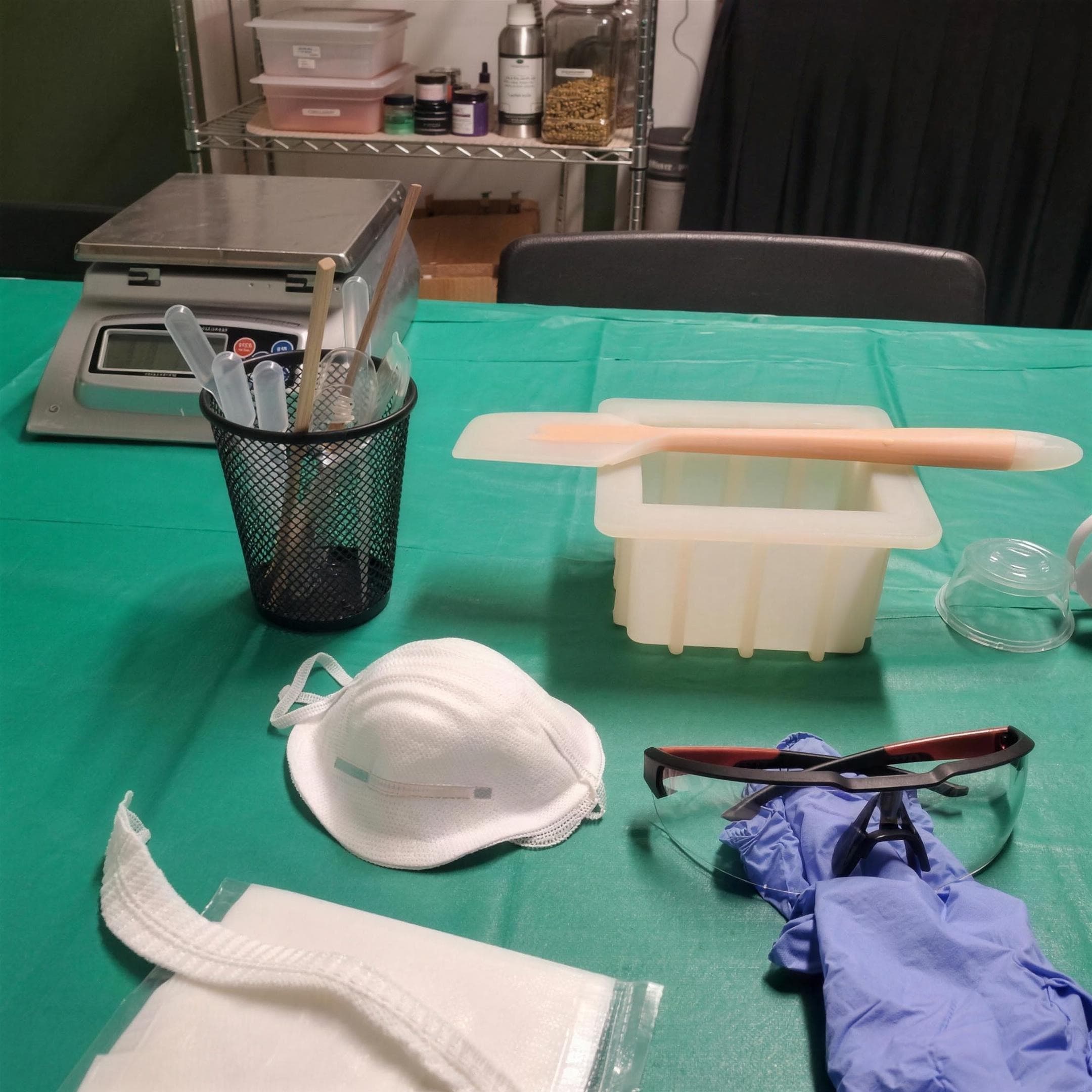
A goat milk soap making class is a hands-on session where you make real cold-process soap from scratch: fresh goat milk stands in for the water, raw oils get blended with lye, and the two turn into soap. You learn to handle the lye safely, add natural color and botanicals, pour your own bars, and take a batch home to cure. Ours uses milk from our own goats, so the day starts out at the pasture before it ever reaches the kitchen.
This class is a little different from the rest of our farm workshops, because the main ingredient walks around the pasture on four legs. We make cold-process soap with milk from our own goats, and you take a full batch home to cure. Here's what the day covers, why we make it the slow way instead of the easy way, and the lye question everyone asks before they sign up.
What happens in our goat milk soap making workshop?
You spend a hands-on session making cold-process soap from start to pour, using milk from our goats. You meet the herd, get a full lye-safety overview, formulate a recipe, blend it, add natural color and botanicals, and pour into molds. It's beginner-friendly, no experience needed, and nobody leaves empty-handed.

Nobody hands you a worksheet and calls it hands-on. You do every step yourself, with one of us right at your elbow for the parts that matter. Nobody's rushing you. The actual work moves fast; the rest of the time is the goats, the smell of the kitchen, and watching a liquid decide to become soap.
Where does the milk come from? Meet the goats
The milk comes from our own goats, not a carton, and the class starts out at the pasture so you meet them before you meet their milk. Goat milk is rich in fats and natural sugars, and that is what gives the finished bar its creamy lather and its mildness, which is most of why people go looking for goat-milk soap in the first place.

Standing in the pasture first isn't a gimmick. It's the difference between a class about an ingredient and a class about an animal you just scratched behind the ears. You understand your bar a little better for having met the source of it.
Cold process vs. melt-and-pour: why make soap from scratch?
Cold process means making soap from raw oils and lye, so you control everything that goes in. Melt-and-pour skips that step: you melt down a base someone else already turned into soap, then add scent and color. It's the difference between cooking a meal and reheating one. We teach cold process, because that's real soap making.
A lot of soap classes, especially the ones held in a rented room somewhere, are melt-and-pour. There's nothing wrong with it as a craft. But the base came from a factory, the milk isn't from anywhere in particular, and you don't learn how soap is actually made. From scratch is slower, and it carries the one ingredient people are nervous about. That brings us to the question we get more than any other.
Do you use lye, and is the finished soap safe?
Yes, we use lye, and yes, the finished soap is completely safe, because there's no lye left in it. Lye is sodium hydroxide, and you cannot make real soap without it. During a reaction called saponification, the lye and the oils turn into soap and glycerin, and the lye gets used up along the way. A properly made, fully cured bar contains none.
This is the part recipe blogs skate over, and it's exactly why we'd rather you learn it here with us than alone at your kitchen counter. Raw lye is caustic before it reacts, and feeling a little wary of it is completely normal. So we walk the whole safety routine together, no shortcuts: how to handle it, the gear to wear, what to do if it spills. That's also why we ask for long sleeves and closed-toe shoes. Do it once with one of us right beside you and the nerves settle; what stays is a healthy respect.
How does goat milk soap get made, step by step?
Here's the short version, and we do each step together, in order:
- Chill the goat milk down, often frozen into cubes, so it stays cold.
- Combine the milk carefully with the lye, and warm your oils separately.
- Blend the two until the mix thickens to about the texture of thin pudding, the stage soap makers call trace.
- Stir in your natural color and botanicals.
- Pour into molds and let it set up.
Why chill the milk first? Lye gives off heat the second it hits liquid, and goat milk is full of natural sugars that scorch when they get too hot, turning the batch yellow-brown with a faintly burnt smell. Keeping the milk cold, often frozen into cubes, holds those sugars in check. It's a small thing that separates a clean, pale bar from a sad brown one, and exactly the kind of detail that's easy to miss in a video and obvious when someone shows you in person. We won't hand you exact amounts here, since the formulating is part of the class, but you'll leave knowing the reason behind every move.
How do you color and design your own bar?
Once the soap hits trace, it's yours to design. We work with natural colorants, clays, plant powders, and dried botanicals instead of synthetic dyes, so you tint and texture your bar with things that come out of the ground. You decide how it looks. Two people at the same table almost never pour the same-looking batch.

This is the part people don't expect to enjoy as much as they do. There's a quiet satisfaction in swirling color into something you understand from top to bottom, because you watched it become soap. We keep handmade soap in our farm shop too, so if you'd like to see the kind of bar this class turns out before you book, that's a good place to look first.
What do you take home, and how long does soap cure?
You take home the batch you made. Fresh cold-process soap needs to cure for about four to six weeks before it's ready: the water evaporates, the bar hardens, saponification finishes settling, and what's left is a long-lasting, gentle soap. So the bars you pour with us go home to rest on a shelf, not into tonight's shower.

The cure is the one part you can't rush, and the one part a single afternoon can't show you. Curing is mostly patience: keep the bars somewhere airy, turn them now and then, and wait. You'll leave understanding the whole process well enough to make another batch on your own. For the wider practical stuff, like what the morning feels like and what to bring, here's the rundown of a workshop day.
Is goat milk soap good for your skin?
Plenty of people find goat-milk soap gentler than commercial bars, which is why it's a favorite for sensitive or dry skin. The fats and natural sugars make a creamy, mild lather, the milk's lactic acid helps lift away dead skin, and unlike a lot of mass-produced soap, the glycerin that forms during saponification stays in the bar instead of being stripped out. We won't make medical claims, but the feel is real.
We'd rather be honest than oversell. Soap is soap, and if you have a real skin condition, your doctor outranks us every time. What we can say is that a lot of people who try a handmade goat-milk bar don't go back to the bottle. If making one with your own hands, milk and all, sounds like your kind of afternoon, we'd love to have you. You can book the soap making workshop, or see everything else on the calendar over on our workshops page, and come meet the goats whose pasture this all starts in. Bring long sleeves. We've got the rest.
Frequently asked questions
Yes, real goat milk soap is made with lye, because lye is what triggers saponification, the reaction that turns oils into soap. When the soap is made correctly and fully cured, the lye is completely used up and none is left in the finished bar, so it is safe to use on your skin.
Lye gives off a lot of heat as soon as it hits liquid, and the natural sugars in goat milk scorch when they get too hot. Keeping the milk cold, often frozen into cubes, holds that heat down so the batch stays pale and mild instead of turning yellow-brown with a burnt smell.
Cold-process soap usually needs about four to six weeks to cure before it is ready to use. During that time the water evaporates, the bar hardens, and saponification finishes, which leaves a longer-lasting, gentler soap.
Cold process means building soap from raw oils and lye, so you control every ingredient that goes in. Melt-and-pour uses a base someone else already made into soap, which you re-melt and simply add color and scent to.
No, a good beginner class assumes you have never made soap before. It walks you through lye safety and every step of the process, so you can arrive with no experience and still pour a full batch to take home.
Many people find goat milk soap gentler than commercial bars, since its fats, natural sugars, and retained glycerin make a creamy, mild lather. It is not a medical treatment, so anyone with a real skin condition should follow their doctor first.