When Are Meat Chickens Ready to Process? A Timing Guide
How to tell when a meat bird is ready for the freezer, from fast Cornish Cross broilers at 6 to 9 weeks to heritage birds that take much longer.
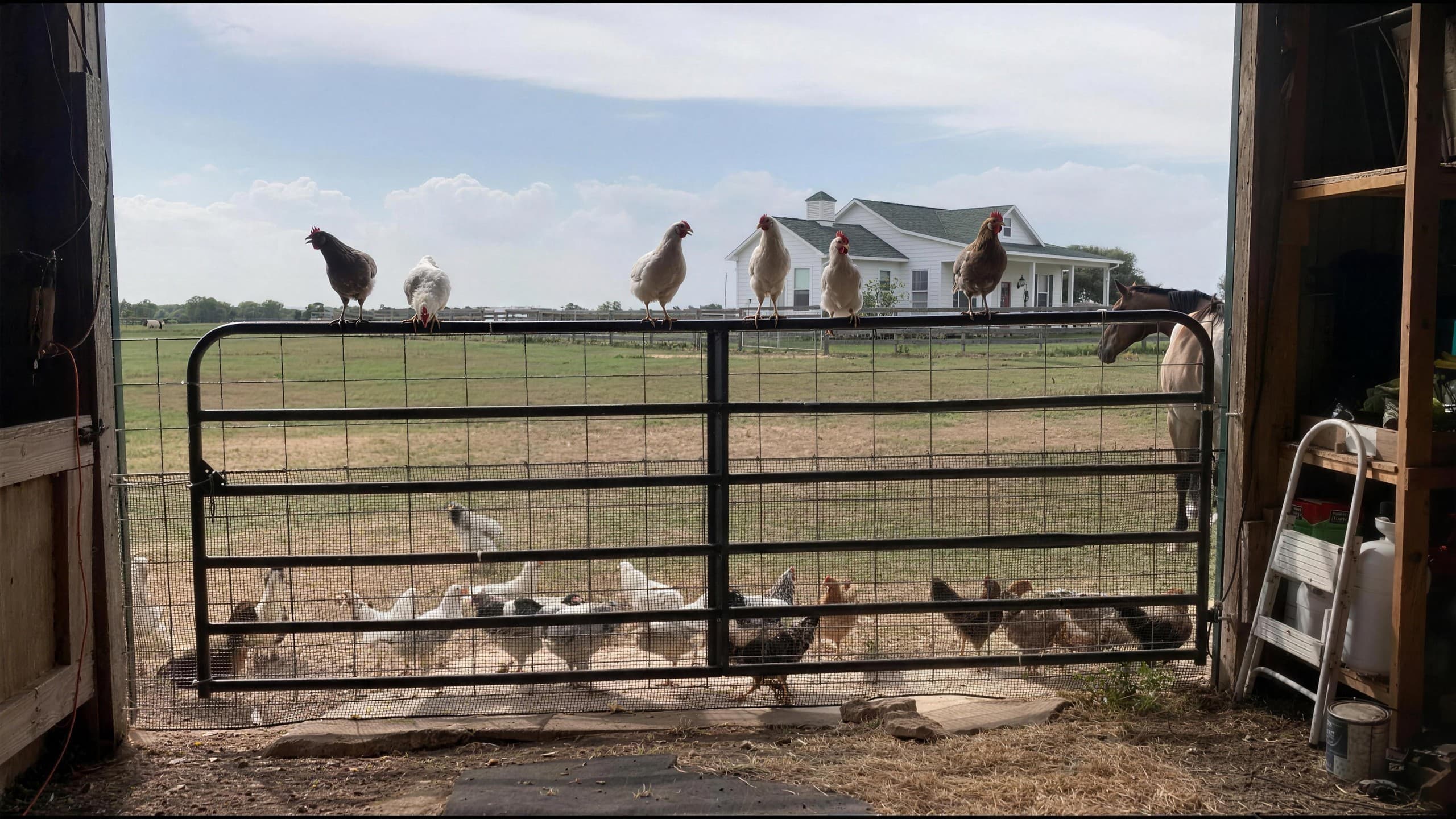
A meat chicken is ready to process when it hits the right weight for its breed, and that lands at very different ages depending on the bird. Fast Cornish Cross broilers are usually ready around 6 to 9 weeks. Slower colored ranger hybrids, the kind bred to forage, take closer to 9 to 11 weeks. Heritage and dual-purpose breeds are the tortoises of the bunch and often need 16 to 20 weeks or more before they fill out.
Age is where you start, not where you stop. The bird itself tells you the rest: how heavy it feels in your hands, how full the breast is, and whether the feathers have finished coming in. Below we walk through the timing by type, the physical signs to look for, why cutting it too early or too late both cost you, and how to plan a grow-out so your processing day lands right. If you'd rather learn the processing part hands-on before your own birds are ready, that's exactly what our field-to-freezer class is for.

How long do meat chickens take, by type?
There's no single answer, because meat birds are bred to grow at wildly different speeds. Here's the rough map most home growers work from:
- Cornish Cross broilers: the fast ones. Ready around 6 to 9 weeks, and for most growers the best age to butcher a Cornish Cross lands right around 8 weeks. Expect a live weight near 5.5 to 8 pounds and a dressed, ready-to-cook bird of roughly 4 to 6 pounds.
- Colored or ranger hybrids: slower, hardier, better foragers. Usually ready around 9 to 11 weeks, sometimes held to 12, landing near a 5 to 6 pound live weight.
- Heritage and dual-purpose breeds: the slow growers, like Rhode Island Reds, Barred Rocks, and Buff Orpingtons. Plan on 16 to 20 weeks, and up to 22 or more for some, to reach a 5 to 7 pound live weight.
The trade is speed for character. A Cornish Cross gives you a big, tender, quick bird on a modest amount of feed. A heritage bird makes you wait, eats more per pound of meat, and pays you back in deeper flavor and a firmer texture. Neither is wrong. They're just different clocks, and the clock you chose the day your chicks arrived is the one that sets your processing date.
What are the physical signs a meat chicken is ready?
Once the calendar says you're close, the bird makes the final call. Pick one up and check three things:
- Weight and heft. A ready bird feels solid and heavy for its size, not light and airy. Weighing a few birds beats guessing.
- Breast fill. Run a hand over the breast. You want a full, rounded shape with real meat on either side of the keel bone, not a sharp ridge with little on it.
- Feathering. A fully feathered bird with few pin feathers plucks cleaner and finishes into a tidier carcass. Lots of pin feathers usually means give it a little more time.
One honest caveat: heritage birds carry so much feather that they look finished well before they are, then seem to shrink once they're plucked. Weigh them, don't just eyeball them. With Cornish Cross it's the opposite lesson. They grow so fast that age and weight matter more than any visual read, so watch the calendar and the scale closely.

Why does processing too early or too late both cost you?
It's tempting to think the only risk is waiting too long, but going too early has a real price too. Process before a bird has filled out and you get a small, thin carcass. You've already paid for the chick, the brooding weeks, and the feed, so a light bird just spreads those same costs over less meat on the table. You also end up plucking and cleaning more birds to fill the same freezer.
Waiting too long has its own bill. With Cornish Cross, holding them much past 8 or 9 weeks raises the risk of leg and heart trouble and outright losses, and their feed conversion falls off, so late feed costs more than the weight it puts on. Heritage birds are far more forgiving on health, but their meat keeps firming up, and an old bird wants slow, moist cooking rather than a hot roast. Either way, dragging out the last weeks is where a lot of the budget quietly leaks. If you want to see how the whole thing pencils out, we break it down in the real cost of processing your own chickens.
How do you plan a grow-out so processing day lands right?
The trick is to work backward from the day you want to process, not forward from the day the chicks show up. Pick your target date, then count back by your breed's timeline: about 8 weeks for Cornish Cross, 10 to 11 for rangers, 16 or more for heritage. That backward count is your order date for chicks.
- Set your processing date first, then order chicks so the batch finishes on that date.
- Aim for the whole batch to be ready together, so you're not processing in dribs and drabs.
- Watch the weather. Here in Texas, brutal summer heat is hard on fast broilers and can slow their finish, so plan the last few weeks for a milder stretch when you can.
- Pull feed about 8 to 12 hours before processing while leaving water available, so the crop and gut are mostly empty and the work stays clean.
- Line up your help, your setup, and your date well ahead. Processing day goes best when nothing is a surprise.
If you're raising your first batch and still learning the front half, from brooder to pasture, our backyard chicken keeping workshop covers the raising side so your birds actually reach a healthy finish weight on time.

Want to learn the processing part before your birds are ready?
Knowing the timing is one thing. Doing the actual work with confidence is another, and it's a lot easier to learn on someone else's birds first, with a person at your elbow, than to figure it out alone the morning your own flock is ready. That's the whole idea behind our hands-on chicken processing class. You work through humane handling, dispatch, plucking, cleaning, and breaking the bird down, and you go home having done it start to finish. If you're curious what the morning actually involves, here's what a chicken processing class is like, and our full guide to the field-to-freezer class covers the rest.
When you're ready to get your hands in, you can see the next date and sign up on our chicken processing class near Houston page, or head straight to the booking page to save your spot. Come learn it here first, then you'll know exactly what to do when your own meat birds hit weight.
Frequently asked questions
It depends on the type of bird. Fast Cornish Cross broilers are usually ready around 6 to 9 weeks, slower colored ranger hybrids take about 9 to 11 weeks, and heritage or dual-purpose breeds often need 16 to 20 weeks or more. Age is a starting point, but you confirm it with weight and how the bird looks and feels.
Most home growers aim for a dressed, ready-to-cook weight of about 4 to 6 pounds. For a Cornish Cross that often means a live weight around 5.5 to 8 pounds at roughly 8 weeks. Heritage birds reach a similar dressed weight but take much longer and carry more feather.
Pick a bird up and check the heft, the breast, and the feathering. A ready bird feels heavy for its size, has a full rounded breast with real meat over the keel bone, firm thighs, and a full coat of feathers with few pin feathers. With fast Cornish Cross, lean more on age and weight than looks, because they finish so quickly.
With Cornish Cross, waiting much past 8 to 9 weeks raises the risk of leg and heart problems, higher losses, and feed that costs more than the weight it adds. Heritage birds are more forgiving on health, but the meat keeps getting firmer and needs slower, moist cooking the longer you wait.
Yes. Pull feed about 8 to 12 hours before you process, while leaving water available, so the crop and gut are mostly empty. That makes for cleaner, easier processing and lowers the chance of contamination.