Farm Workshops Guide: Hands-On Classes for Beginners
A guide to hands-on farm workshops: sourdough, soap, backyard chickens, gardening, cooking, and more. What each class teaches, and how to pick one.
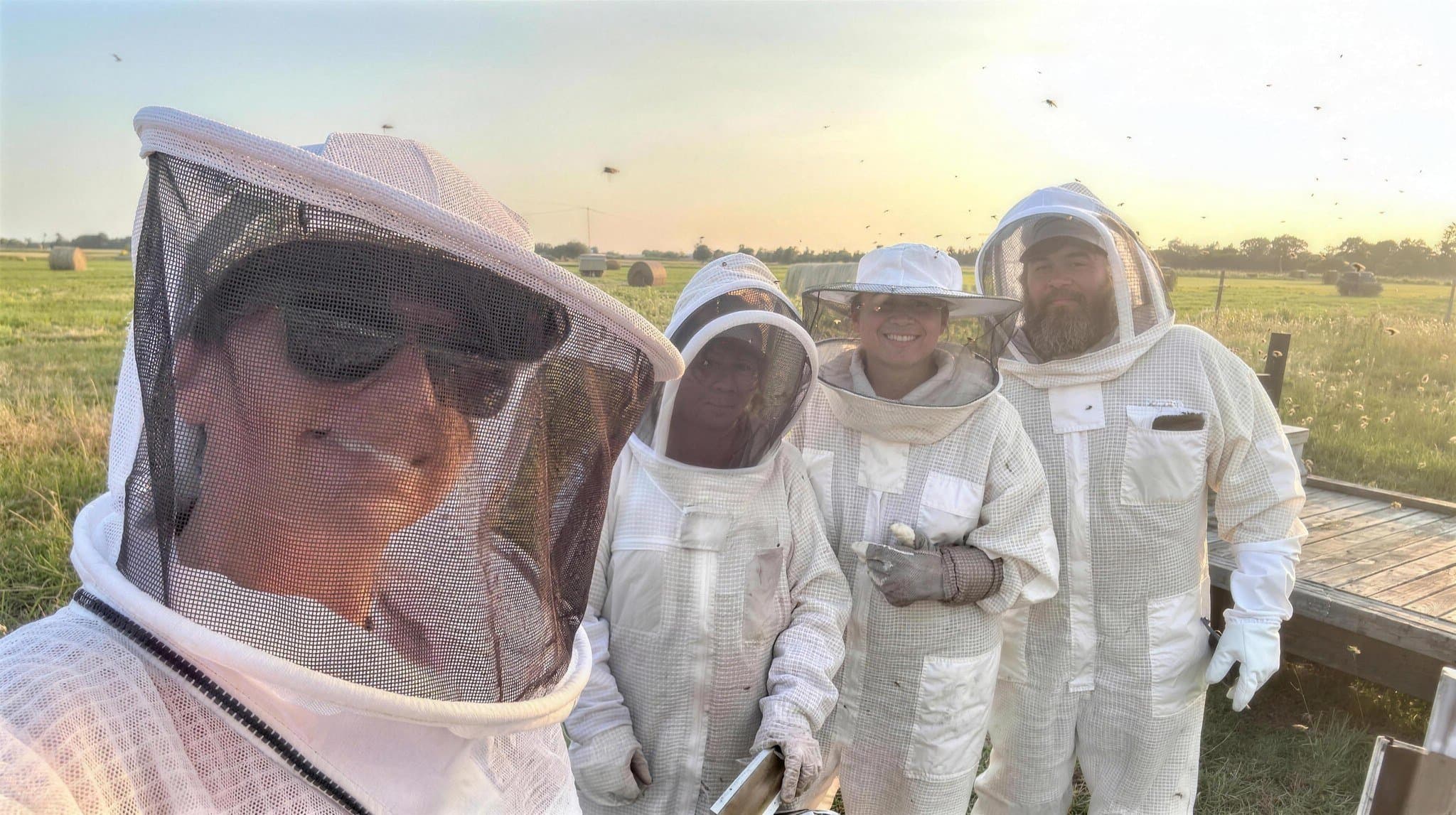
A farm workshop is a small-group, hands-on class held on a working farm, where you do the real work yourself, learn beside the people who do it every day, and take home what you made. At our farm that can mean baking sourdough, making goat-milk soap, keeping or processing chickens, growing a vegetable garden, or cooking a meal from the row it grew in. This guide walks through what a farm workshop actually is, what each of the six classes we run teaches, and how to pick the one to start with.
People come to farm skills from every direction, and whichever one brought you here, you're welcome. A sourdough phase that refuses to end. A kid who asks where eggs come from and won't accept the store as an answer. A quiet itch for work you can hold in your hands instead of work that only ever lives on a screen. We grew this place from a backyard garden, and we learned every one of these skills the slow way, which is to say by getting them wrong first and paying for it in dead starters and escaped goats. A good hands-on class spares you the worst of that. We made those mistakes so you can skip the tuition we paid in spoiled flour and rebuilt fencing, and we keep prices and dates where they belong, on the calendar, so we can spend our words here on the part you can't book sight unseen.
What are hands-on farm workshops?
A hands-on farm workshop is a class where you do the real work and carry the result out with you, not a lecture you sit through. What you can learn covers most of a homestead: baking, soap, vegetable gardening, keeping and processing poultry, cooking a meal from the row it grew in. The thread running through all of it is that none of it is a slideshow. You knead the dough. You pour the soap. You set the transplant in the bed.
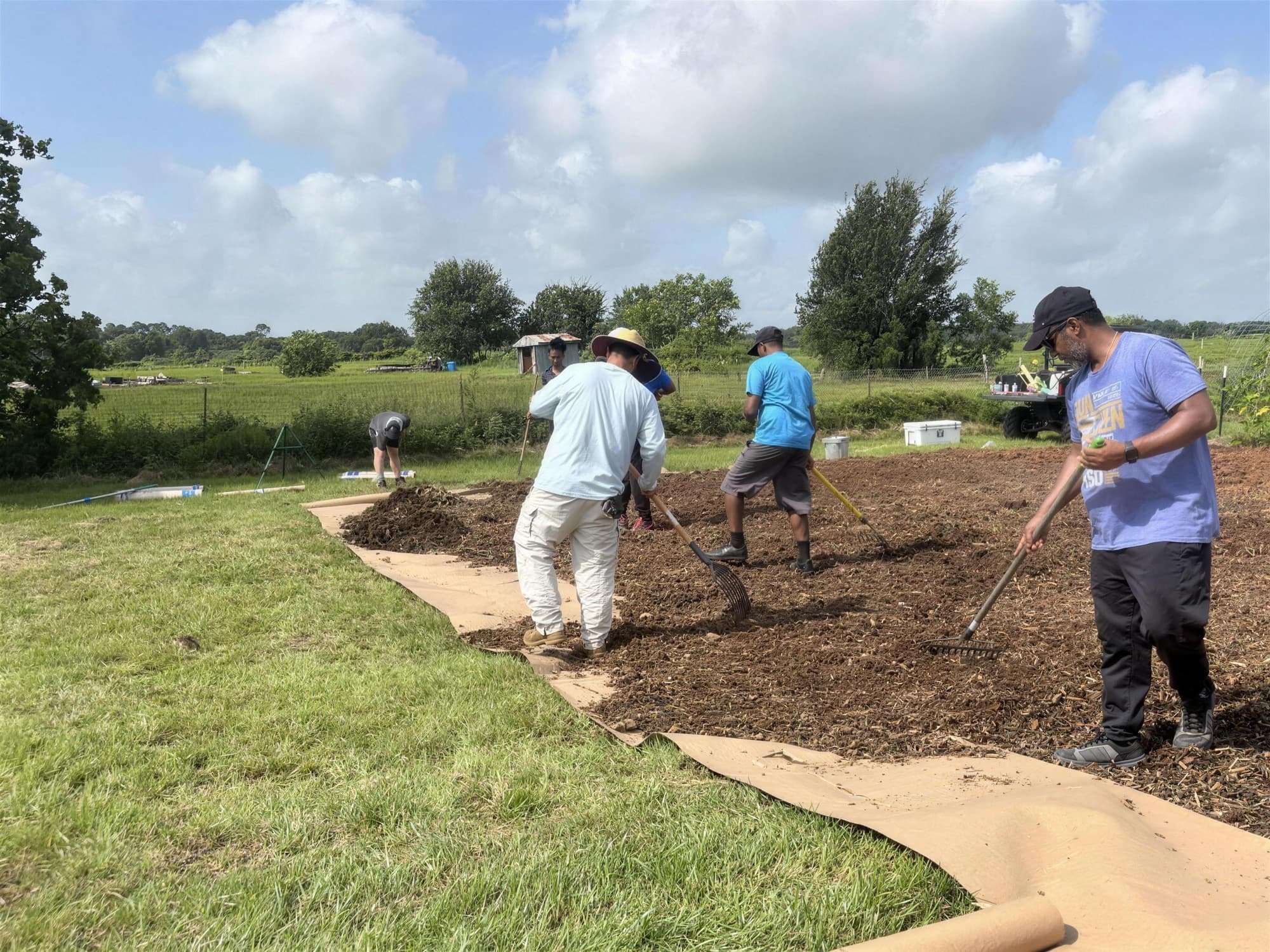
A video can show you what a finished thing looks like, but it can't catch your mistake while it's happening, or let you feel the difference between dough that's ready and dough that needs ten more minutes. Feeling that for yourself, with someone friendly right there to nudge you along, is the whole reason to come stand with us instead of watching alone. You fold a season of trial and error into one afternoon, and you do it without ruining three batches of soap or losing a hen to a raccoon you never saw coming.
People ask how a farm workshop differs from a homesteading class, and honestly the line is thin. A homesteading class is the wider umbrella, any self-reliance skill from canning to candle-making, often taught anywhere there's a table. A farm workshop is one held on a working farm, which means the goats whose milk goes into the soap are just up the path and the chicken in the processing class actually lived here. The setting isn't decoration. It's the lesson.
How do you choose the right farm workshop for you?
Pick by appetite, not aspiration. The best first workshop is the skill you'd actually use next week, not the most impressive one. Then weigh three things: how much time you have, how you feel about mess and early starts, and what you want to walk out holding. We build every class for beginners, so don't let skill level worry you, it almost never decides things.
Time is the other honest constraint. Some classes are a focused morning; others are an unhurried afternoon that ends with a shared meal, and each listing tells you the length so you can match it to the day you actually have. Mess matters too. If early starts and getting your forearms genuinely dirty sound like the good part, processing or soap will suit you. If you'd rather settle at a calm table with a cup of coffee, sourdough or cooking fit better.
If you bake most weekends, sourdough pays you back fastest. If you've already put hens on the calendar in your head, a keeping class saves you the expensive coop mistakes before you make them. Garden in pots on a balcony? The gardening workshop scales down to your space and still sends you home with starts. What you take home is usually the clearest tiebreaker:
- Sourdough from scratch: a live starter and a loaf you shaped yourself.
- Natural goat-milk soap: a full batch curing on your shelf.
- Seed to Harvest: seasonal garden starts to put in the ground.
- Field to Freezer: a packaged bird ready for the freezer.
- Backyard chicken keeping: the hands-on reps to start your own flock.
- Farm-to-table cooking: the knife skills and a meal you built yourself.
Read what each class hands you at the end and you'll know which one you actually want. When you're ready to compare openings, the full workshop calendarlists everything we're running.
Chicken processing: field to freezer
Field to Freezer is our family poultry-processing class, where adults and kids learn together to take a bird from the pasture to a packaged, ready-to-cook chicken in one sitting. It covers humane handling, basic anatomy, the full step-by-step, butchering and portioning with real technique, packaging for the home freezer, and an honest conversation about where meat comes from.
Everyone leaves with one bird they processed and packaged themselves. It's the most serious class we run, and we teach it gently, without gore and without dodging what it is. If you want the full picture before you decide, ethics and all, read about our field-to-freezer processing class. The minimum age is eight, with a parent staying present and supervising the whole time, and we provide the sharp tools and safety gear.
Backyard chicken keeping
Our backyard chicken keeping class is a beginner class taught hands-on with our flock. You'll learn coop and run design, predator-proofing, feeding, how to spot a sick bird, and how to handle hens and collect eggs, then spend real time in the working brooders, coops, and runs with the birds themselves. There's a live question-and-answer session with the farmer built in, so bring every question you've got.
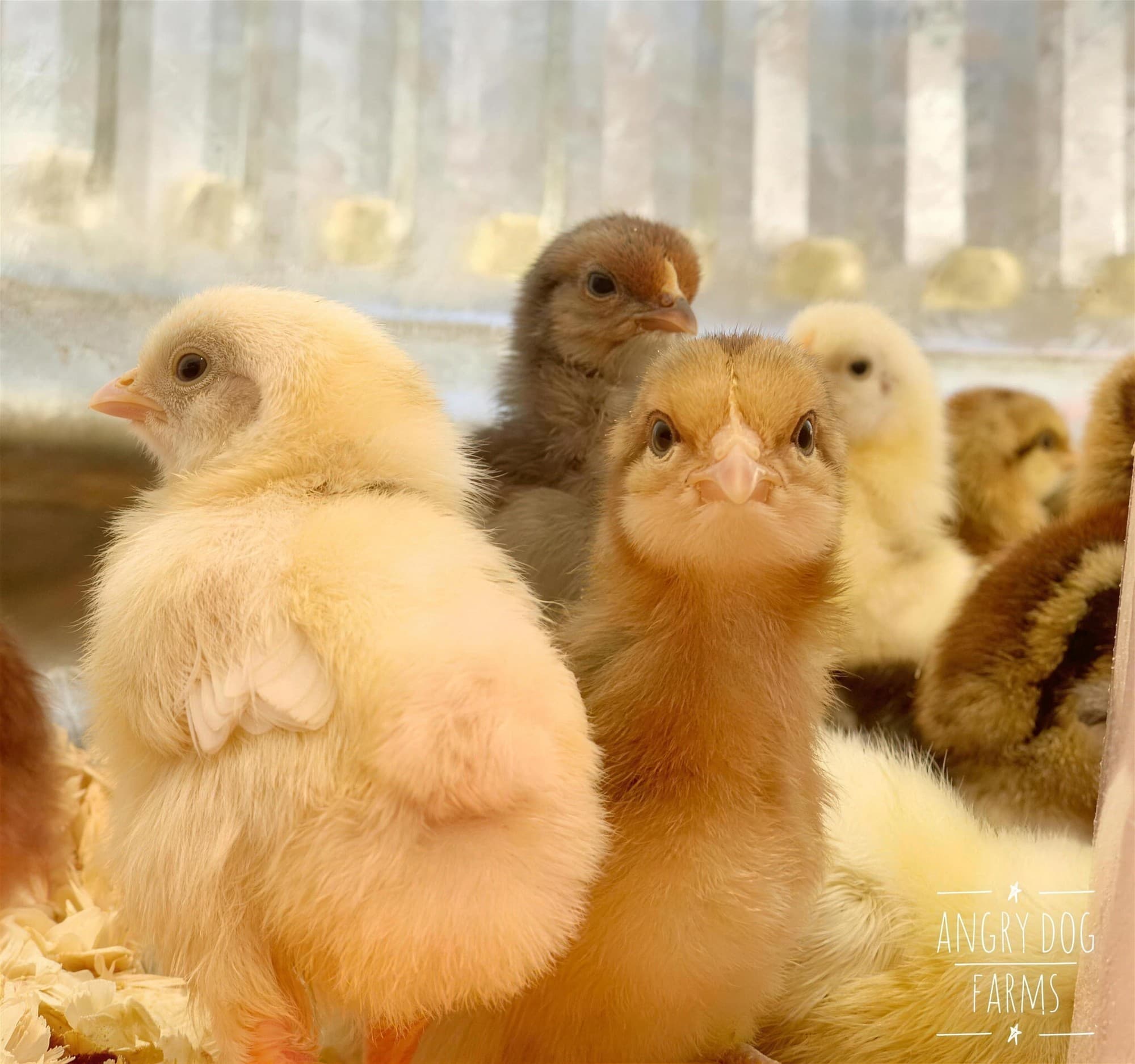
You go home with the hands-on reps that a video can't give you, plus the quiet confidence that you really can do this. If a flock is the itch, this is where to start a backyard flock the right way before you spend a dollar on the wrong coop. It's beginner-friendly and a good one to bring the family to.
Farm-to-table & garden-to-table cooking
Our farm-to-table cooking class starts in the garden. You'll pick your own ingredients, prep them, and cook a three-course meal at the outdoor kitchen with the farm chef, then everyone sits down at one long table to eat together. There's also a dinner series, each evening hosted by a local food maker who shares the story behind the meal.
You take home the knife skills and heat sense that make good cooking work at your own stove, and a meal you built from the ground up. It's the most social class we run, and a lovely gift for the cook who owns all the gadgets but never quite the confidence. There is a real difference between an August tomato and a March one, and the class leans into whatever is ripe that week. Come cook a meal you harvested yourself; the menu follows the season and the weather.
Sourdough from scratch
Our sourdough class, taught with Bell's Bakes, is hands-on from start to finish, not a demo you watch from a stool. You'll feed a starter, mix, fold, shape, and score, with the fermentation science explained in plain, friendly language. You taste sample bread together partway through, which is its own kind of motivation.
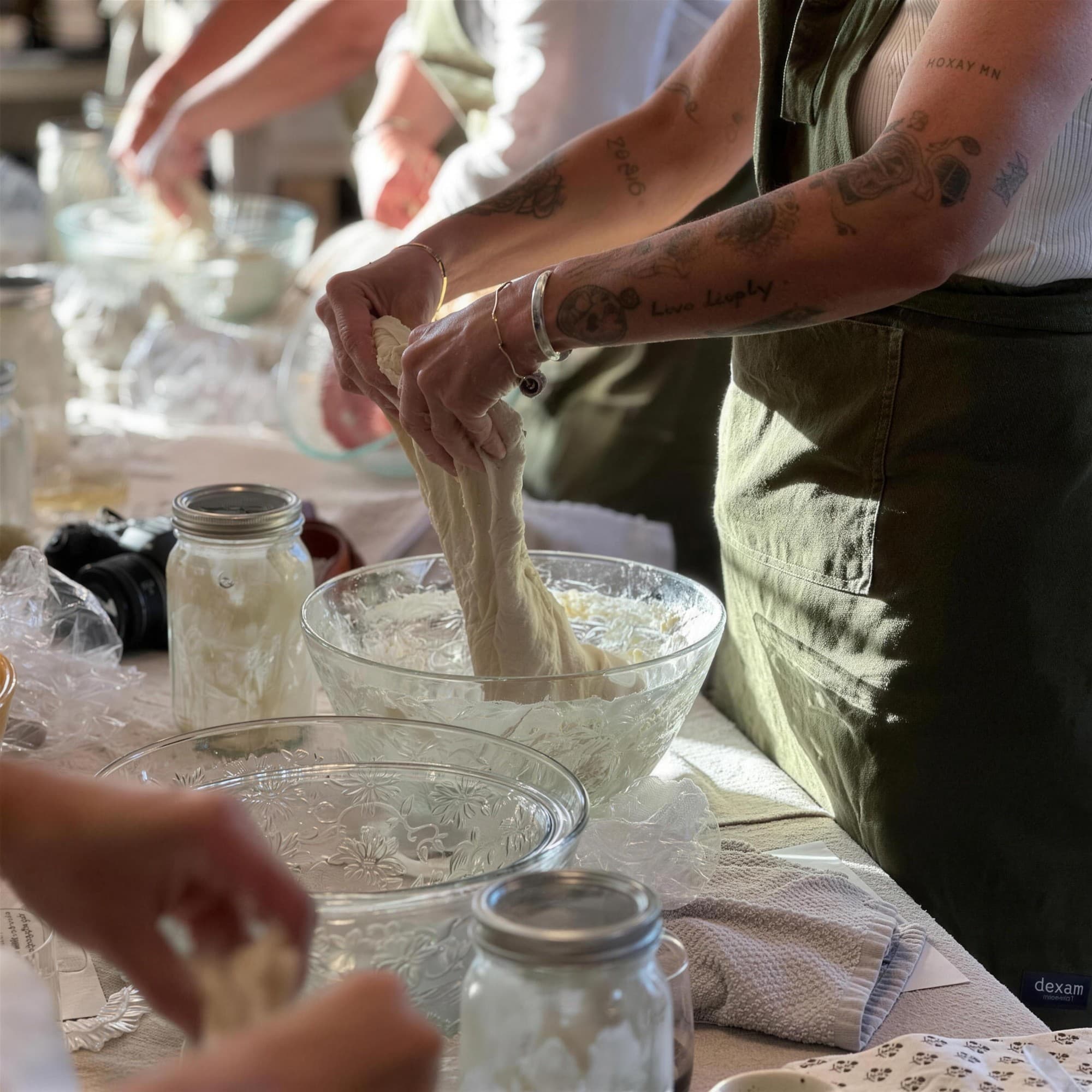
You leave with a pouch of live starter and a loaf you shaped and can bake at home. To learn sourdough beside a bakerwho does it for a living is the fastest cure for a dense, gummy crumb. It's beginner-friendly, and kids are welcome and tend to fall hard for the dough, ending up asking to feed the starter daily.
Natural goat-milk soap making
Our natural soap-making workshop is cold-process goat-milk soap, made with milk from our own goats. You'll meet the herd first, learn lye safety with no shortcuts, formulate a recipe, work in natural colorants and botanicals, pour your molds, and learn how curing turns the whole batch into usable soap over the weeks that follow.
You take home a full batch to cure, since cold-process soap needs about four to six weeks before it's ready to use. If you've ever wanted to make soap from our goats' milk and understand why it comes out so creamy, this is the class for you. Wear long sleeves and closed-toe shoes for the lye, and check the class page for the age minimum. You can also find the same kind of soap on the shelf in our farm shop, if buying ever beats making.
Seed to harvest: vegetable gardening
Seed to Harvest is our vegetable-gardening workshop for anyone growing in pots or a full acre. A short classroom session on planning, soil, and timing leads into hands-on work in the demonstration beds: transplanting, direct sowing, and learning to read what the plants are actually telling you. It covers soil health, succession planting, natural pest management, and watering.
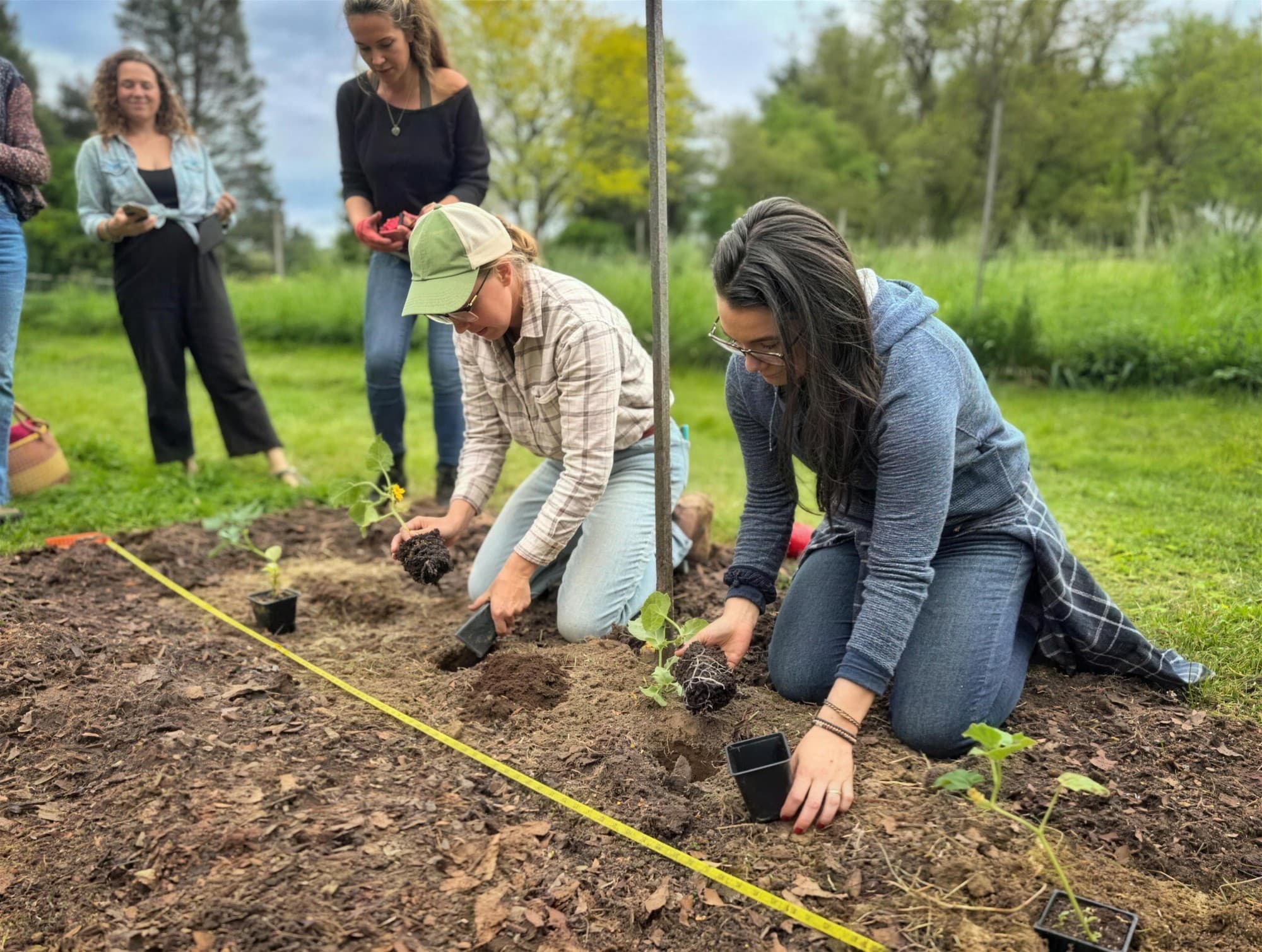
You go home with seasonal vegetable starts to put straight in the ground, and a clear plan in your head for the whole growing year. If your past gardens fizzled out by July, you're in good company, and this is how to plan a garden that produces all season instead of all at once and then never. It welcomes every level, balcony growers included.
Who are farm workshops for, and what should you expect?
Farm workshops are built for beginners first. Never done this before? Perfect, that's exactly who we love teaching, and we'll be right beside you the whole way. Families are welcome too, with a few age floors for safety on the classes that use sharp tools or lye. Our processing class, for instance, starts at eight with a parent who stays and supervises the whole time. Each workshop's page lists its own age minimum, so check there before you book for a young one.
They also make a genuinely good gift, the rare one that's an afternoon and a skill rather than another object for a shelf, and it has a way of becoming a new weekly habit at home. On the day, dress for a working farm: clothes you can ruin, closed shoes, a layer to match the season. Most classes run a few hours, long enough to do the thing properly and short enough that nobody's wrung out by the end. We provide the tools, the aprons, the safety gear, and the cleanup. You just bring your willingness and an appetite, since most classes feed you something along the way. For the full rundown of what a workshop day is actually like, from what to wear to how the hours flow to what you carry out, we wrote a separate guide so this one wouldn't run twice as long.
How do you book a farm workshop?
Booking happens online, on each workshop's own page, where the current dates, openings, and price live. We keep prices off the blog on purpose, because they change and the calendar is the honest source. Each listing tells you what's included, what to bring, and the age minimum, and your spot is held while you check out.
If you want something we don't list, a private group, a custom skill, or a workshop for a particular occasion, just ask; our custom workshops pagetakes requests. And if a full class feels like a lot to commit to before you've set foot here, no pressure at all, a plain visit is the easygoing way in. It lets you see where a class would happen, scratch a goat behind the ears, and decide whether a longer booking is your kind of day before you give it a whole afternoon.
When you're ready, browse upcoming workshopsand pick the skill you'll still be using a year from now, not the one that photographs best. Come as you are. We'll be glad you did, and you'll leave with something you made and a little more sure of your own hands.
Frequently asked questions
A farm workshop is a small-group, hands-on class held on a working farm, where you do the real work yourself and take home what you made. Instead of watching a demonstration, you knead the dough, pour the soap, or set the transplant, with an experienced farmer right beside you.
No. Our classes are built for beginners first, so you can arrive knowing nothing about the skill and still leave able to do it on your own. Everything is taught step by step, and there is plenty of time for questions.
Dress for a working farm in clothes you do not mind getting dirty, closed-toe shoes, and a layer that matches the season. We provide the tools, aprons, and safety gear, so you mostly need to bring yourself and an appetite, since many classes feed you along the way.
Yes, most of our workshops welcome families, with a few age minimums on the classes that use sharp tools or lye. Each workshop page lists its own age minimum, so you can check before you book.
It depends on the class, but you always leave with something real. That can be a live sourdough starter and a loaf, a batch of curing soap, garden starts, or a packaged chicken ready for the freezer.
A homesteading class is the wider umbrella for any self-reliance skill and can be taught almost anywhere. A farm workshop is one held on a working farm, so the goats whose milk goes into the soap and the garden the vegetables came from are right there with you.