Farm-to-Table Cooking Class: Pick It, Cook It, Eat It
Our farm-to-table cooking class starts in the garden: harvest your ingredients, cook a 3-course meal with the farm chef, then share it at one long table.
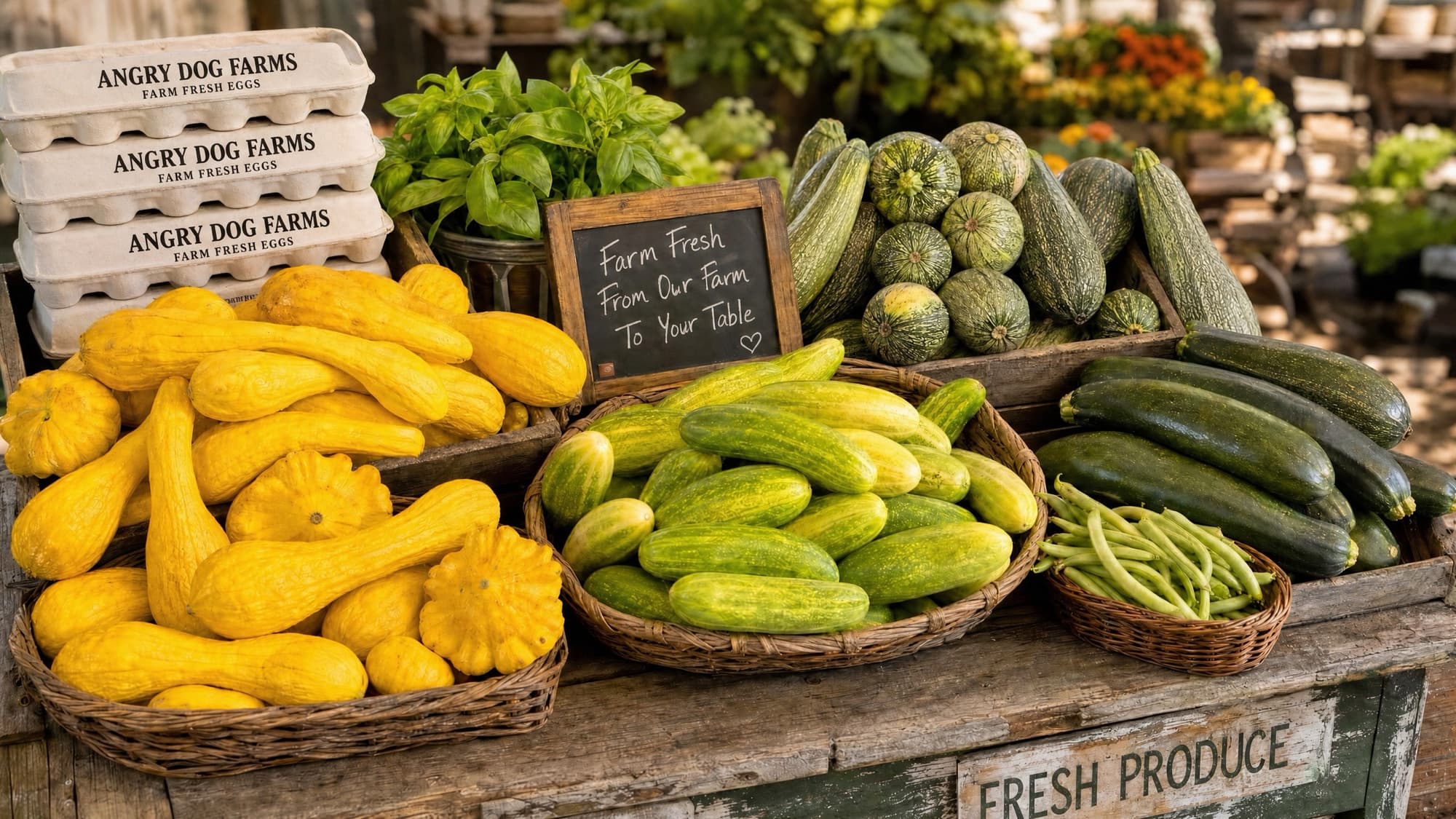
A farm-to-table cooking class is a hands-on session where you harvest your own ingredients from the garden, cook a meal with a chef, and then sit down and eat it together. At our farm that means you walk into the beds, cut what's ripe that week, carry it to the outdoor kitchen, and turn it into a three-course dinner. Most cooking classes hand you a tray of pre-portioned ingredients and call that the farm part. Ours starts with dirt under your nails.
It's one of our hands-on farm workshops, and on the right evening it's the most fun we have all season. No experience required, and no nerves either. Here's what a seat actually gets you, who it suits, and how to tell our two cooking formats apart.
What is a farm-to-table cooking class?
It's a hands-on session where you harvest fresh ingredients, cook a meal with a chef, and then eat it together. Ours starts in the garden on purpose: you pick what's ripe that week, so the menu is set by the season, not a printout. You cook it, you eat it.
Plenty of places sell a farm-to-table dinner where the only farm part is the table. You sit, a server brings the courses, you leave full and happy. That is a fine night out. It is not this. Here you do the work, with the farm chef beside you, and the food on your plate is something you cut from the bed an hour earlier. The garden walk isn't a photo op before the real class starts. It is the first lesson: what ripe looks like, why we pick the smaller squash, how a tomato smells when it's finally ready.

What happens during the class, start to finish?
The class runs in four moves: a harvest walk through the garden, mise en place at the outdoor kitchen, cooking a three-course meal with the farm chef, and sitting down to eat it at one long table. It's hands-on the whole way through. You're not watching a demo. You're prepping, searing, and plating your own courses, with a friendly hand nearby the whole time.
Roughly, it goes in this order:
- The harvest walk. We hand you a basket and walk the beds together, cutting herbs, greens, and whatever the week is giving us. You learn to read the plant instead of the calendar.
- Mise en place. Everything washed, sorted, and prepped before a single pan gets hot. It's the step home cooks skip and the one that makes the rest go smoothly.
- The cooking. Three courses, built with the chef talking you through each call. You do the knife work and run the heat; the chef keeps you off the rocks.
- The table. Everyone sits down and eats what they made. This is the part people don't expect to love, and then do.

How long the whole thing takes depends on the menu and the season, so we keep the exact timing on the booking page instead of guessing at it here. The meal is included, because the meal is the point: the food you cook is the food you eat.
What skills will you take home?
You'll leave with three skills that carry into every meal you cook after: knife work, heat management, and flavor building. Those are the things a recipe can't teach you, because they live in your hands and your senses. Practice them once with a chef at your elbow and they come home with you.
Knife work is the one people fear and the one that changes the most. A few minutes of someone fixing your grip beats a year of watching videos. Heat management is knowing when a pan is ready and when to back off, which you learn by feeling it go wrong once with a chef there to catch it. Flavor building is the quiet skill: salt in layers, acid at the end, tasting as you go. If you want to bake the bread for the table too, that is a separate class, and you'll come home with a loaf you shaped and a live starter.
Cooking class or farmer-hosted dinner: which one fits you?
We run two cooking formats, and they're genuinely different nights. The hands-on cooking class is the one where you harvest, prep, and cook a three-course meal with the farm chef. The dinner series is an evening hosted by a local farmer, baker, or food maker who cooks and tells the story behind the meal.
Pick the cooking class if you want your hands in it: to chop, sear, season, and walk away able to do it again at home. Pick the dinner series if you'd rather be cooked for and you want the story, the person who raised the lamb or milled the flour telling you why the dish is the way it is. Both nights end the same way, at one long table with people who were strangers when the sun was higher. The booking page lists which format runs on which night, since both are seasonal.

Who is a farm-to-table cooking class for?
This class is built for date nights, gifts, and total beginners. No cooking experience is needed, and there's nothing to be nervous about. The chef meets you right where you are, and the steps are simple enough to follow and good enough to be worth learning. It's an easy gift to give, because the person opening it gets to do something instead of just receiving a thing.
Couples book this one constantly, and we understand why. It's a night where you do something together that isn't a movie, and you eat well at the end of it. Small friend groups work just as well. It's also a good one to do with an older kid who's getting curious in the kitchen, with a parent right there, and the booking page notes who each session suits. If you're buying it as a present, the booking page handles the gifting, and the skills you pick up mean it keeps paying off long after the night is over.
What should you wear and bring?
Wear closed-toe shoes you don't mind getting a little garden dirt on, and clothes you can cook in. We handle the rest: aprons, knives, pans, ingredients, and the chef. Bring an appetite and, if you like, something to write notes in.
You're outside for the harvest walk and at the outdoor kitchen to cook, so dress for the weather the way you would for any farm afternoon. Layers in spring and fall, a hat in summer, and expect the ground near the beds to be a little damp. Leave the good white sneakers at home. Everything you'd cook with is here already, so there's no need to haul a knife roll across the parking lot. Come as you are.
Why does pick-it-yourself, seasonal cooking taste better?
Food you pick yourself tastes better for two honest reasons: it's fresher, and you cooked it with attention. A tomato cut an hour ago hasn't spent a week in a truck losing what made it good. And cooking with the season means you're working with produce at its peak instead of fighting an out-of-season ingredient that never had a chance.
The menu shifts as the garden does, which is the whole point and also why we can't hand you a fixed list of dishes. Spring is green and quick; high summer is loud with tomatoes and squash; fall leans into roots and the last of the heat-lovers. We pull from a garden full of heirloom varieties, plus herbs, eggs, and honey from the farm when they suit the plate. If cooking by the calendar appeals to you, you can even grow the vegetables yourself in our gardening workshop. The class is weather-dependent on top of that, which we count as part of the charm rather than a flaw.

How do you book a seat?
To book, head to the workshop page, pick a date that works, and reserve your seat there. Because both cooking formats are seasonal and weather-dependent, the live calendar is the only honest source for what's running and when, so we send you straight to it rather than promise a month here. You can also browse the rest of our farm workshops if you want to make a whole day of it.
We keep the price on the booking page for the same reason we keep the date there: both move with the format and the menu, and the page keeps them current. What we can promise is the shape of the night: pick it, cook it, eat it, beside people who were strangers at the start and aren't by dessert. When you're ready, reserve a seat at the table. Come hungry. Leave a little lighter.
Frequently asked questions
It is a hands-on session where you harvest fresh ingredients from the garden, cook a meal alongside a chef, and then sit down and eat it together. The menu follows whatever is ripe that week, so the season sets the dishes rather than a fixed recipe card.
No. These classes are built for total beginners as much as confident cooks, and the chef meets you wherever you are. You do the real work with a friendly hand nearby, so there is nothing to be nervous about.
You pick up the skills a recipe cannot teach, mainly knife work, heat management, and building flavor as you taste. You also learn to read the garden and cook with the season, which changes how you shop and eat long after the class ends.
In a hands-on cooking class you harvest, prep, and cook the meal yourself with a chef guiding you. At a farm-to-table dinner you are cooked for, and the evening is about tasting the food and hearing the story behind it from the person who grew or made it.
Wear closed-toe shoes you do not mind getting a little garden dirt on and clothes you can cook in. You are outdoors for the harvest walk and at the outdoor kitchen to cook, so dress for the weather the way you would for any afternoon on a farm.
Yes. The food you cook is the food you eat, so the shared meal at the end is the whole point of the class. Everyone sits down together at one long table once the cooking is done.