Raw Honey 101: From Our Hives to Your Pantry
Raw honey vs regular honey, explained from a farm with its own hives: what raw really means, why it crystallizes, and the one warning we always give.
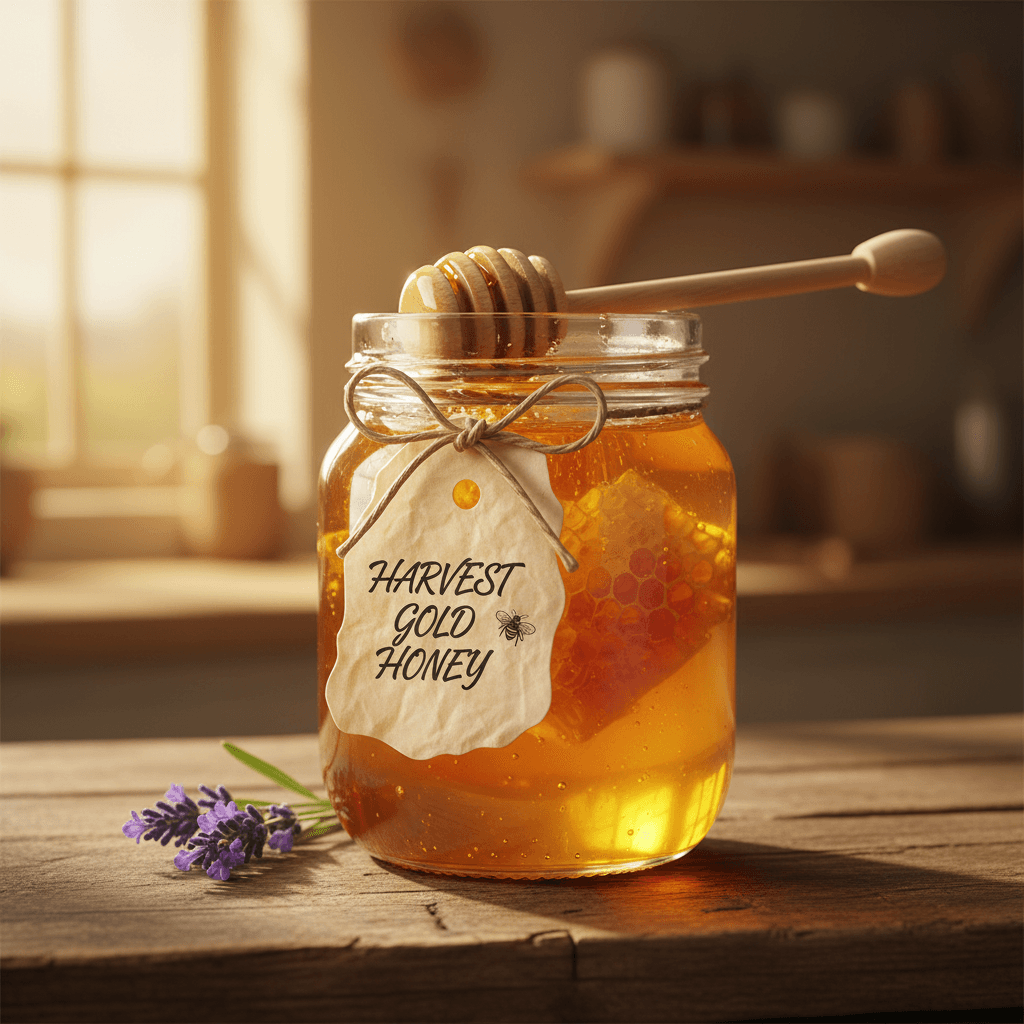
Extraction day leaves the whole kitchen sticky. Doorknobs, light switches, one memorable year the phone. What stays with you is the smell: warm wax and something floral that shifts with whatever the bees worked that month. Most of the confusion about raw versus regular honey clears up once you've watched honey leave a frame, so that's where this post goes.
For where honey fits in the larger habit of buying food from the people who made it, the full farm-to-table guide is the long read. This one stays in the pantry.
What "raw" means (and what the label doesn't guarantee)
Raw honey is honey that hasn't been heated past roughly hive temperature and hasn't been filtered so finely that the pollen comes out. That's the whole definition. The trouble is that no rule meaningfully enforces the word on a label, so "raw" gets printed on jars that have been through processing the bees wouldn't recognize. Treat the label as a claim, not a guarantee. What backs the claim up is knowing the source: a honey with a farm, a face, and an extraction story is raw because you can check. A honey with a brand mascot is whatever the brand says it is.
From our hives to the jar
Here's the whole process, because it's short. We pull frames from the hives once the bees have capped the comb with wax, which is their way of declaring the honey finished. Each frame gets uncapped with a warm knife — the cappings peel back in a sheet that smells like the inside of summer. The frames go into the extractor, a hand-cranked drum that spins the honey out. From there it runs through a coarse strainer: bits of wax and the occasional unlucky bee leg come out, pollen and everything microscopic stays in. Then jars. That's the entire chain.
Small operations coarse-strain instead of fine-filtering because the fine material is the point; strain it all out and you've made the supermarket product with extra steps. The apiary and the pollinator beds it sits beside are a stop on every guided tour, seasonal tasting samples included, if you'd like to see the source before you commit to a jar.
Raw vs regular: what pasteurizing and fine-filtering take out
Commercial honey is usually heated well past hive temperature and pushed through filters fine enough to remove all the pollen. There are reasons: heat makes honey flow through machinery faster, and filtering keeps it clear on the shelf and slows crystallization, which shoppers read as quality. The cost is aroma, some of the subtler flavor, and the pollen itself. Much commodity honey is also blended from many sources to hit one consistent taste. None of that makes it dangerous or fake; it makes it uniform. Raw honey is the opposite bet: cloudier, quicker to crystallize, and it tastes like a particular place in a particular month.
The real benefits — and the claims we won't make
What raw honey genuinely offers is flavor with a fingerprint. Our spring jars taste different from our late-summer jars because the bees worked different blooms, and the pollen and aroma that processing strips out are still in there. As a thing to eat, it's better honey. That's the case, and it's enough.
Now the part where we leave money on the table. You'll hear that local raw honey cures seasonal allergies. The evidence for that is thin. The theory needs you to be allergic to the pollen the bees collect, but bees mostly work flower pollen, while allergies mostly come from wind-borne pollen off trees and grasses the bees ignore. Some people swear by a daily spoonful anyway, and it's a pleasant experiment. But we sell honey, and we're telling you: it's still sugar, and it isn't medicine. Buy it because it tastes like the field it came from. That claim we'll stand behind.
Crystallized honey is fine
Every raw honey crystallizes eventually. Honey is an oversaturated sugar solution and the glucose wants out; how fast depends on the glucose-to-fructose balance of what the bees foraged, the storage temperature, and the pollen particles that give crystals a place to start. Crystallization is, if anything, evidence the jar is what it claims to be. To bring it back, set the jar in a bowl of warm water and stir now and then. Skip the microwave: it heats unevenly, and overheating undoes the raw part you paid for.
One real warning: no raw honey for babies under one
Do not give honey, raw or otherwise, to a baby under one year old. Honey can carry spores of the bacterium that causes infant botulism, which an infant's gut can't yet handle. Adults and older children are fine. This is the one health rule we state without hedging, every time a family with a newborn buys a jar.
How to store raw honey (basically forever)
A sealed jar at room temperature, out of the steam zone over the stove, keeps in any practical sense forever. Honey doesn't expire; it crystallizes, which you now know how to fix, and that's the worst it does. Don't refrigerate it, since cold just speeds the crystals. Honey is also one of the few things this farm has every single month, which makes it the anchor of the pantry; see what's in season month by month for the rest of the year's rhythm.
How to spot genuinely raw honey when you're buying
Buy where you can ask the person who did the extracting, and ask anything; people who handle their own bees can't shut up about them. Expect crystallization over time and count it as a feature. Expect jars to vary harvest to harvest, because they should. Be suspicious of honey that is crystal-clear, identical year-round, and cheap, since at least one of those usually means heavy processing or blending. If you'd rather skip the detective work, our raw wildflower honey is in the shop, coarse-strained by us, from hives you can come stand next to. Sticky hands optional.