What's in Season When: Our Month-by-Month Produce Guide
A seasonal produce guide from our own fields: what comes out of the ground each month, from the first spring greens to winter storage crops.
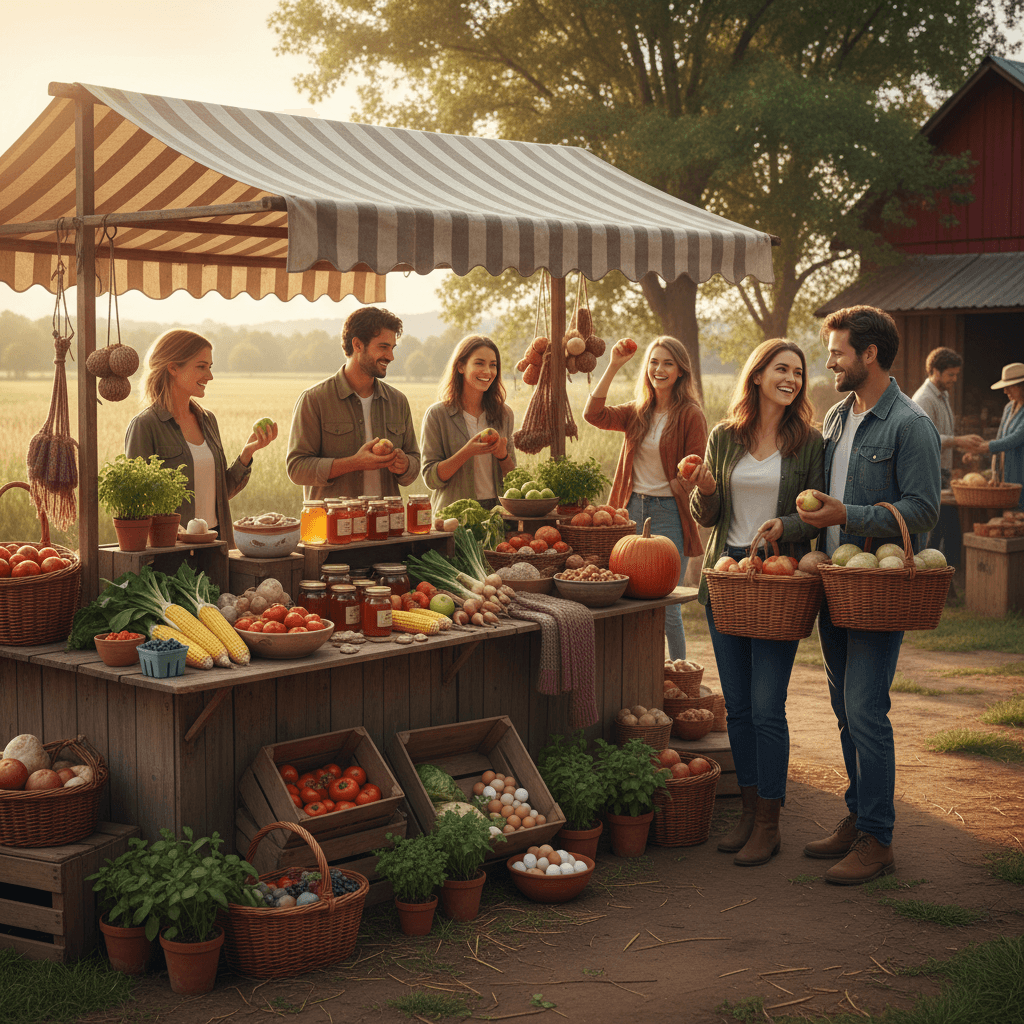
This week the stand table holds strawberries, the first real lettuces, radishes, and the garlic scapes we'll be pickling by Friday. Next month the table will look different, and the month after that, different again. That's the premise of this seasonal produce guide: not a chart from nowhere, but what one temperate, four-season farm pulls from its own ground, month by month. Your local timing may run a few weeks ahead of ours or behind; the order barely changes. We've kept this rhythm season after season on the same 85 acres, so the pattern below is observed, not averaged.
One note before the calendar: peak-season produce tastes better for an unglamorous reason. It was picked ripe and eaten fresh instead of picked early and shipped. The full argument for eating this way lives in our farm-to-table guide to seasonal eating; this post is the reference you come back to.
Early spring: the greens come back
The year starts slow. First come the hardy greens, cut small and a little defiant, then the spring herbs. After months of storage crops, the first salad of the year gets eaten with a reverence no salad deserves. Nothing about early spring is abundant. It is, however, green, and after winter green is enough. The hens feel the lengthening days before we do; production climbs week by week until every layer is on and we're gathering 18 to 24 eggs a day. The waiting ends properly in May, when the first asparagus gets cut, still tender enough to eat raw, and at least one spear never makes it out of the field.
Late spring: the first real abundance
Then the table fills. Lettuces in quantity instead of as a treat, radishes that go from seed to table in three weeks and act smug about it, strawberries from the garden rows, and garlic scapes, the curly stalks we snap off the garlic so the bulbs fatten. We pickle scapes every year and every year they go fast. The stand table goes from sparse to crowded in about three weeks. This is the season our kitchen diary loves most; notes from a May pantry is what one of these months looked like in real time, dish by dish.
High summer: the glut
There's a week, usually midsummer, when the tomatoes win. More comes in daily than any kitchen can keep up with: tomatoes, summer squash, beans that need picking every other day, cucumbers, and stone fruit from the orchard dropping into the same two weeks out of spite. This is the cheapest, best-eating stretch of the year, and we'd tell you to eat outrageously while it lasts; the rest of the year subsidizes these weeks. It's also the stretch where good food dies in bags, because people buy at glut pace and store at no pace. Storing farm-stand produce is the survival guide for exactly this month; read it before the tomatoes win at your house too.
Early fall: the orchard's turn
The orchard takes over: apples first, pears close behind, while the tomatoes make a last unhurried push and the peppers, which sulked through the cool start of summer, finally hit their stride. The first winter squash gets cut and set aside to cure instead of eaten. An apple eaten off the tree next to one from months of cold storage is the fastest seasonal-eating argument we know. Fall is the photogenic season, the one on calendars, and for once the calendars are right. It's also the hinge: from here on, every picking decision is partly a storing decision.
Late fall: roots, squash, and storage crops
The shift finishes. Carrots, beets, and potatoes come out of the ground; onions and cabbage come in; the cured squash goes up on shelves. We leave the dirt on the roots because it keeps them better than any wrapper we've tried. The job list flips from harvesting to squirreling away, and week by week the stand table trades market color for pantry staples. It is exactly as satisfying as it sounds.
Winter: what the quiet months still offer
We'll be straight about winter: the fields rest and the stand thins out. Farming families call the lean stretch the hungry gap, and no marketing fills it. What's left is real, though. Storage carrots and beets that have gone sweet in the cold, potatoes, onions, cabbage, squash off the shelf, hardy greens when the year is kind, and a kitchen leaning on whatever got put up in August. Winter is when eating this way asks something of you. It's also why the first spring greens get the welcome they get.
Year-round from the farm
Some things never leave the table. Eggs slow down in deep winter, when the hens take what we assume is a union break, but they never stop entirely. Honey ignores the field seasons altogether; raw honey from our hives is jarred after harvest and keeps, in any practical sense, forever. Sourdough and the rest of the baking run year-round too, weather be what it may, and the soaps, candles, and the rest of the handmade shelf never followed the seasons in the first place. Between those and the storage crops, what the farm shop carries year-round is a shorter list than July's but never an empty one, and the shop is where this whole calendar plays out in real time, one shelf at a time.
The quick list: produce by month
The year above, compressed. Each pair of months, what's coming off this farm:
- January–February: storage crops (carrots, beets, potatoes, onions, cabbage, winter squash), eggs at their slowest, honey and baked goods as always.
- March–April: the first hardy greens and spring herbs, egg production climbing fast.
- May–June: asparagus (first cut in May), lettuces, radishes, garlic scapes, strawberries; peak egg season.
- July–August: the glut — tomatoes, summer squash, beans, cucumbers, stone fruit from the orchard.
- September–October: apples and pears, peppers at their best, the last tomatoes, the first winter squash.
- November–December: roots, cabbage, onions, cellared squash; the stand thins toward the storage list.
Using the calendar when you shop
Two habits make the list useful. First, shop the pile: whatever there's most of is at its best and its cheapest, and the glut is where the deals live. Second, ask what's about to come in; farmers always know. Then hold the whole thing loosely. The list wobbles a year either way because weather gets a vote, and the weather has never once read our planting schedule. The field decides the menu. It always has.