Backyard Chickens 101: What to Know Before You Get Hens
The real math on backyard chickens for beginners: what hens cost, how many to start with, and the parts of chicken keeping nobody warns you about.
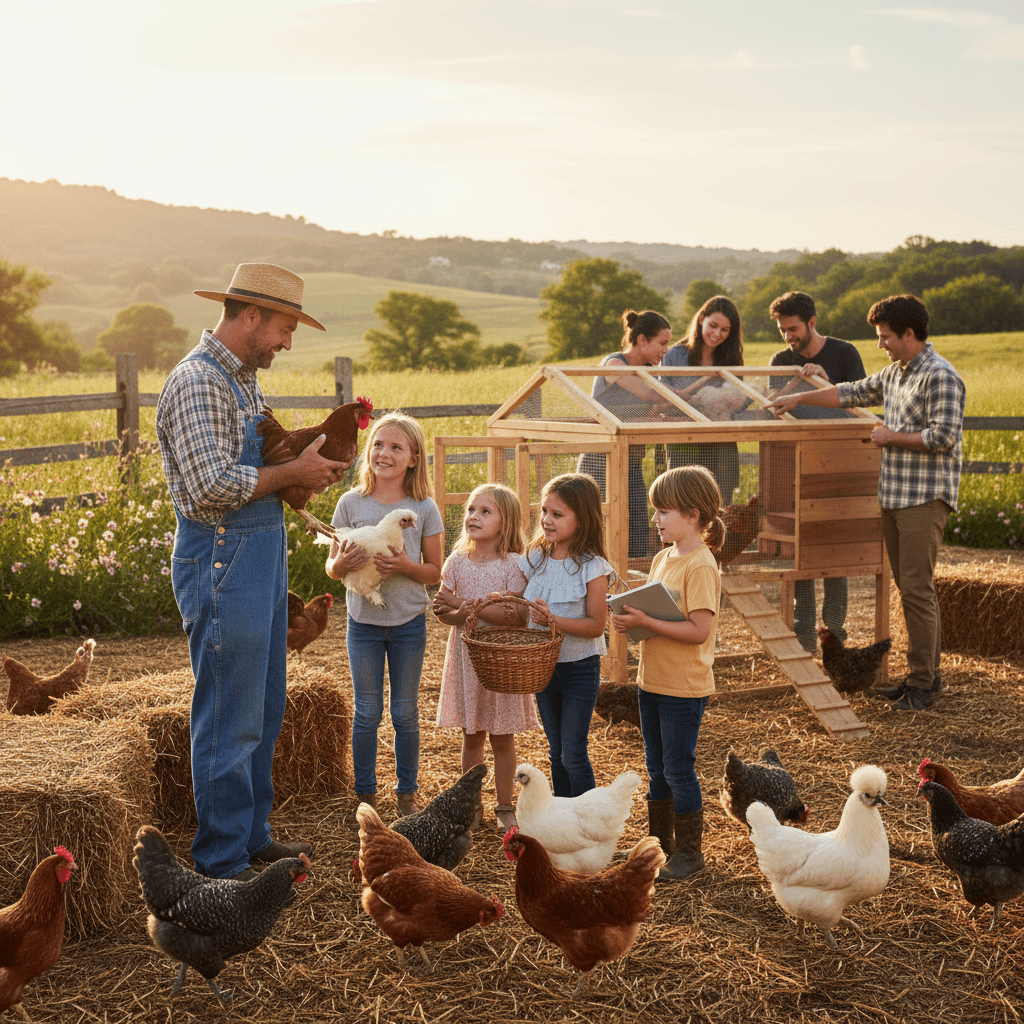
We keep chickens every day of the year and sell their eggs in the farm shop, and we still tell about a third of the people who ask that backyard chickens aren't for them. Not because hens are hard. Because the honest math surprises beginners, and we'd rather surprise you now than after you've bought the coop.
This is the talk we give at the fence. It's one rung of a longer ladder; if you're still deciding between hens, bread, and a garden bed, our beginner's guide to learning farm skills hands-on covers the whole climb.
Check your local rules first
Before any of the fun decisions: your town has opinions. Ordinances cap flock sizes, ban roosters, set coop distances from property lines, and HOAs add their own layer on top. None of the decisions below matter if the answer here is no. We can't check for you, but your town's website can, usually in under ten minutes. It's the least interesting step, and it voids all the others.
The honest math: what hens cost
Here's what we see beginners spend, in ranges:
- Chicks: $4 to $6 each. Ready-to-lay pullets: $25 to $40.
- The coop: roughly $200 if you build it, $600 and up prefab. Predator-proofing is where the money goes either way.
- Feed for a flock of four: about $20 to $30 a month.
A good layer gives you 4 to 6 eggs a week in season, slowing in winter and during molt. Run the numbers over the coop's lifespan and a small flock's eggs commonly land at $4 to $8 a dozen. That is not cheaper than store eggs.
So why does anyone do it? Because the eggs are better and the hens are company — and because what separates farm-fresh eggs from store-bought was never the price. Keep hens for the quality and the company. Keep a spreadsheet for the savings, and watch it disappoint you.
How many chickens to start with
Three or four. Never one — chickens are flock animals, and a lone hen is a miserable hen. Three survives the loss of one without drama; four gives a small family more eggs than they expect. You don't need a rooster for eggs, only for chicks, and your neighbors will have opinions either way. Skip him.
One warning from years of watching this happen: there is a documented condition called chicken math, in which four hens become eleven within two springs. Nobody is immune. Build the coop for who you'll be, not who you are.
Chicks or grown hens?
Chicks cost less and grow up tame, because you're the large warm thing that fed them. But they need a brooder, a heat source, and five to six months of care before the first egg, and the feed-store bin is not always right about who's a hen.
Pullets (young hens just about to lay) cost more up front and skip all of that. You get eggs in weeks, not seasons. Our recommendation: first-timers usually do better starting with pullets, then raising chicks in year two once the daily routine is boring. For breeds, you don't need a catalog: docile dual-purpose birds like Orpingtons, Australorps, and Plymouth Rocks suit most beginners fine.
The coop: what matters and what doesn't
What matters: dry, draft-free, and ventilated — those last two are not in conflict, though every first coop builder assumes they are. Enough space per bird that nobody gets pecked out of boredom. Somewhere dim to lay, somewhere high to roost. And latches a raccoon can't open, which rules out more latches than you'd think.
What doesn't matter: cute. Shutters, window boxes, a little porch; the hens are indifferent and the predators are unimpressed. The $600 prefab fails at the same flimsy latch the $200 homemade coop fails at. Spend the difference on hardware cloth and good hinges, and let it be ugly. The hens will redecorate with mud regardless.
Predators: the part everyone underestimates
Everything eats chicken. Raccoons, hawks, foxes, weasels, the neighbor's sweet dog who has never done anything like this before. We don't say it to scare you off; we say it because the long guides bury it at minute 35, and it's the most common way a first flock ends.
Twelve years in, we still close our coop every single night. Not most nights. Every night, in rain and in February, after late dinners and before early flights. Predator-proofing isn't a product you buy once; it's a habit you keep. If that sentence made you tired, that's useful information.
A day in the life of chicken chores
The actual work, on a normal day: open the coop, feed, check water, collect eggs, close the coop at dusk. Most mornings that's under ten minutes with coffee in one hand. Weekly, you add bedding. Seasonally, a full clean-out that will make you question your choices for about an hour.
So no, chickens aren't hard to take care of. The catch is the word every. Those minutes happen every day, including the icy ones, the sick ones, and the ones you'd planned to spend elsewhere. Vacations now require a chicken sitter, and chicken sitters are a whole genre of favor. The hard part of hens isn't effort; it's the streak.
When the eggs slow down
The part nobody budgets for: laying drops sharply around year three, and hens live 8 to 10 years. That gap is five-plus years of feeding and housing hens that lay occasionally or not at all.
There are only a few ways to handle that, and none of them is comfortable to think about at the feed store. Some people keep their retirees as pets and garden help. Some cull and replace. We're not here to pick for you — we're here to tell you to decide who you are about this before you get hens, because you'll be deciding either way.
Meet our hens before you commit
Here's the one move no blog post can offer: do the chores once before you buy anything. Collect eggs that are still warm, latch the run, haul the feed, see how it sits with you. That's exactly what our backyard chicken keeping workshop is for: time with our flock, our coop, and our mistakes, all available for inspection.
If you've never taken a farm class and want to know what a workshop day looks like before booking, we wrote that up too.
And if you read all of this and still want hens: good. You're exactly the kind of person who should have them.