Learn Homesteading Skills: A Beginner's Guide to Farm Workshops
Which farm skill to learn first, what hands-on workshops cost, and why you don't need land to learn homesteading skills. The honest beginner's guide.
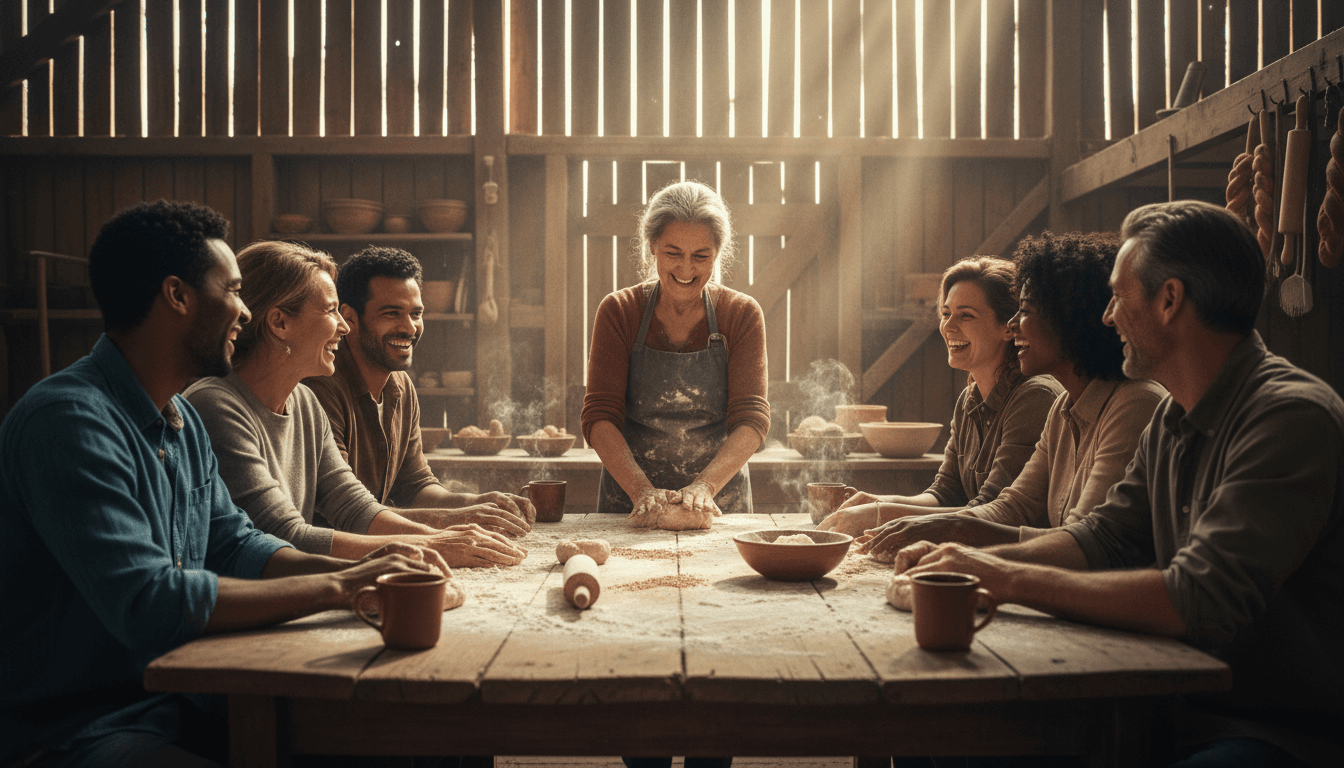
Nobody decides to learn homesteading skills all at once. It starts smaller: a sourdough phase that outgrows the counter, a kid who asks where eggs come from and won't accept "the store," a vague itch for work that leaves something real in your hands. Then one evening you're pricing chicken coops online and realizing you have no idea what you're doing.
Twelve years ago, we traded our office commute for muddy boots and learned everything on this list the slow way: wrong fences, failed batches, a vet on the phone at two in the morning. You don't have to do it that way. This guide is the map we wish we'd had — which skills to start with, what hands-on workshops cost, and why the thing you think you're missing (land) is the one thing you don't need yet.
- Why learn farm skills hands-on (not from a screen)
- You don't need land to start
- Where to start: a beginner's skill ladder
- Keeping backyard chickens
- Making soap from scratch
- Making cheese with real milk
- Growing, preserving, and farm-kitchen skills
- Working with the bigger animals
- What farm workshops cost
- Your first workshop: what it's like
- How to pick your first workshop
Why learn farm skills hands-on (not from a screen)
First, some fairness to the internet. Online homestead schools are good at what they're good at: reference, repetition, watching a technique five times at half speed. Memberships out there run about $25 to $35 a month, and for some subjects (planning a garden layout, say) that's money well spent. We won't pretend the internet taught us nothing.
But a screen can't stand next to you. It can't catch the mistake while it's happening; it finds out when you do, weeks later, holding the evidence. And it can't hand you the feel of a thing: what dough that's ready feels like under your palms, the moment a curd sets, the way a calm hen settles when you hold her right. We've watched people who studied for months get more from one afternoon of someone saying "there, that's it" at the right moment.
Some skills are information. Most farm skills are feel, and feel doesn't compress into video. That's half the answer to "are farm workshops worth it." The other half is money, and we get to it further down.
You don't need land to start
The most common worry we hear is some version of "but we live in a townhouse." The direct answer: you don't need land to start, and most people shouldn't start with land anyway.
Soap, cheese, bread, and preserving fit in any kitchen, including a small one. Chickens fit most backyards, pending your local rules. A garden starts in pots on a step. The skills come first; the acreage, if it ever comes, comes last. Plenty of contented homesteaders never get past a balcony of tomatoes and a weekly bake, and that's a complete life.
This is part of why the farm runs workshops at all. You can practice on our 85 acres before committing to a single one of your own.
Where to start: a beginner's skill ladder
People ask us where to start often enough that we keep an opinionated order. It isn't a law. It's just the sequence that wastes the least money and breaks the fewest hearts.
- Visit a working farm. Watch chores happen at the pace they happen. An afternoon of watching someone muck a pen tells you more about whether you want this life than a winter of reading about it.
- Kitchen crafts: bread, cheese, preserving. Cheap to try, fast feedback, and nothing depends on you staying interested. If you quit, you're out a bag of flour.
- A garden bed. The first skill on the list with a season attached. It teaches patience and timing, and it fails gently.
- Small livestock. Chickens first. Bees if you're patient and like reading. Both are real commitments, but commitments measured in minutes a day.
- Bigger animals last. Goats, sheep, pigs. They're the first thing on this list that can't be paused, and the first that will notice if you lose interest. Earn your way here.
The next few sections walk the ladder one rung at a time.
Keeping backyard chickens
Chickens are the gateway livestock, and there's a reason. The daily chores are measured in minutes, the learning curve is kind, and the eggs work as a report card: when something's off in the flock, the nesting boxes tell you. The eggs are also, fair warning, persuasive. A visitor last spring collected her first warm egg on a tour and then kept drifting back to the coop all afternoon to check whether more had appeared. They had. It didn't help.
They're also the skill people most often start wrong, because the internet undersells predators and oversells the egg savings. Our backyard chicken keeping workshop exists so you can do the chores a few times before you buy a coop. We wrote up the whole picture, numbers included, in what to know before you get hens.
Making soap from scratch
Real soap means lye, and lye is the reason a first batch goes better with company. The chemistry itself is plain (fat plus lye, stirred until both become something new), but sodium hydroxide deserves respect, and respect is easier to learn from a person than from a warning label.
One afternoon teaches you the procedure and the calm. We've watched people arrive at a soap session with serious lye nerves and leave mildly annoyed at how uneventful the whole thing was, which is the correct outcome. After that, soap is the most repeatable craft on this list: same recipe, same result, and a curing rack that perfumes whatever room it sits in. The full story of how real soap gets made is its own post.
Making cheese with real milk
Fresh cheese is the most beginner-friendly corner of the dairy world. Ricotta takes under an hour and forgives nearly everything. We've taught cheesemaking here since spring of year two, with milk from our own goats.
The catch is the kits. The $30 kits fail quietly, usually because of the milk rather than the maker, and people walk away convinced they can't do it. Milk quality decides more than technique does, which is exactly the kind of thing a class catches and a box can't. If cheese is calling you, start with a pro, not a kit.
Growing, preserving, and farm-kitchen skills
The growing side starts smaller than you think it should. We grow 50-plus heirloom vegetable varieties across the gardens, and we still tell beginners: one bed, a handful of crops, one season at a time. A first garden's job isn't food security; it's teaching you what your patch of ground does in June. Our seed-to-harvest workshop covers the full cycle, seed packet to harvest basket, for exactly this reason.
Preserving is the opposite case: the one kitchen skill that punishes improvisation. Bread forgives, cheese mostly forgives, but canning is where "close enough" can mean a pantry you can't trust. Learn water-bath basics standing next to someone who has done it for years, then improvise on flavors, never on process.
And then there's bread. Sourdough is the classic argument for hands-on learning — the dough has opinions, and no video can tell you what "ready" feels like under your hands. We've made the case for learning sourdough beside a baker at length, so we'll spare you the sermon here. Farm-to-table cooking rounds out the kitchen list; it's one of our workshop themes, and it changes how you shop more than how you cook. Once the kitchen skills click, the calendar takes over: what you cook starts following what the ground is doing, and we wrote about that whole rhythm in eating with the seasons.
Working with the bigger animals
Our position on goats, sheep, pigs, and bees: a beginner can learn a real amount in one day, and none of it is "how to own them."
In an afternoon you can learn handling and feeding, the basics of hoof and health checks, how a hive gets opened and why the smoke. What takes seasons: breeding, kidding, pasture management, the judgment calls at two in the morning. Nobody leaves a day with our goats ready to own goats. They leave knowing whether they want to, which, given what goats cost to un-own, is the more valuable thing.
If you'd rather meet the animals before committing to anything, a 90-minute guided tour gets you behind the scenes in the barn and into the apiary. Ask the farmer leading it which goat runs the herd; the answer comes with opinions.
What farm workshops cost
Now the money half of "worth it," asked plainly: what do homesteading classes cost?
Most providers hide pricing behind booking pages, which we find annoying, so here's the landscape. Online memberships run about $25 to $35 a month. In-person half-day classes at farms, creameries, and craft schools commonly land between $50 and $150. Ours are posted next to the dates — check what's on the workshop calendar for current numbers, because prices belong beside the thing they buy.
Here's the part nobody itemizes: the class is the cheap end of the hobby. A chicken setup runs a few hundred dollars before the first egg. A home soap kit-out is roughly $60 to $100 before the oils. A cheese kit is $25 to $40. The workshop's real job is to tell you whether the expensive part is for you, and a class that teaches you that you don't want chickens is the cheapest coop you'll never buy.
For scale: a day at the farm without a workshop is $15 general admission, or $35 for the guided tour.
Your first workshop: what it's like
If you've never taken a hands-on class as an adult, here's what people do at a farm workshop: they make the thing. Small group, aprons on, your hands in the material within the first hour. It isn't a lecture, and nobody checks whether you look silly.
You take home what you made, which matters more than it sounds. There's a difference between a certificate and the thing itself riding home on the passenger seat. For the hour-by-hour version, what to wear, and the worries every first-timer has (we know them all), read your first workshop, hour by hour.
How to pick your first workshop
A short decision aid, since "all of it" isn't a first step. Pick by appetite, not aspiration: the right first workshop teaches a skill you'd use weekly in your current kitchen and your current life, not the one your imaginary homestead needs. The fantasy farm can wait. Your Tuesday dinners can't.
Kitchen crafts suit the cautious — cheap follow-up, fast results, no livestock asking where you've been. Chickens suit the committed, the ones already reading municipal code for fun. And if you're coming as a crew (family, coworkers, the book club that's mostly a supper club), we take custom workshop requests through the workshops page and build the day around you.
That's the map. You don't need land, you don't need experience, and you don't need to know where any of this is going. Come learn one thing with your hands, wear shoes that can take mud, and see what follows you home. Browse upcoming workshops when you're ready. Come as you are; you'll leave a little lighter.